Third Workshop of the Joint Project “Tackling Staff Shortages and Ensuring Future-proofing Skills in Health”

HOSPEEM and EPSU invites you to the third in-person workshop of the joint project on the topic of Digitalisation and Future-proofing Skills in Health in Rome, Italy.


Three o'clock 5 – 6 March 2026

PinRome, Italy (venue TBC)


The reimbursement for the flight and accommodation is available for the EU participants:

  • Please follow this link to calculate eligible travel costs
  • Maximum reimbursement for accommodation – 98 EUR/night (for up to 2 nights)

The interpretation will be provided for English, Italian and 3 languages to be determined by number of requests


Please register here

The registration deadline is 4 February 2026


Should you have any questions please do not hesitate to contact o.horlach@hospeem.eu

Second Workshop on the Temporary Work Agency of the Joint HOSPEEM-EPSU TaSSEFSH Project

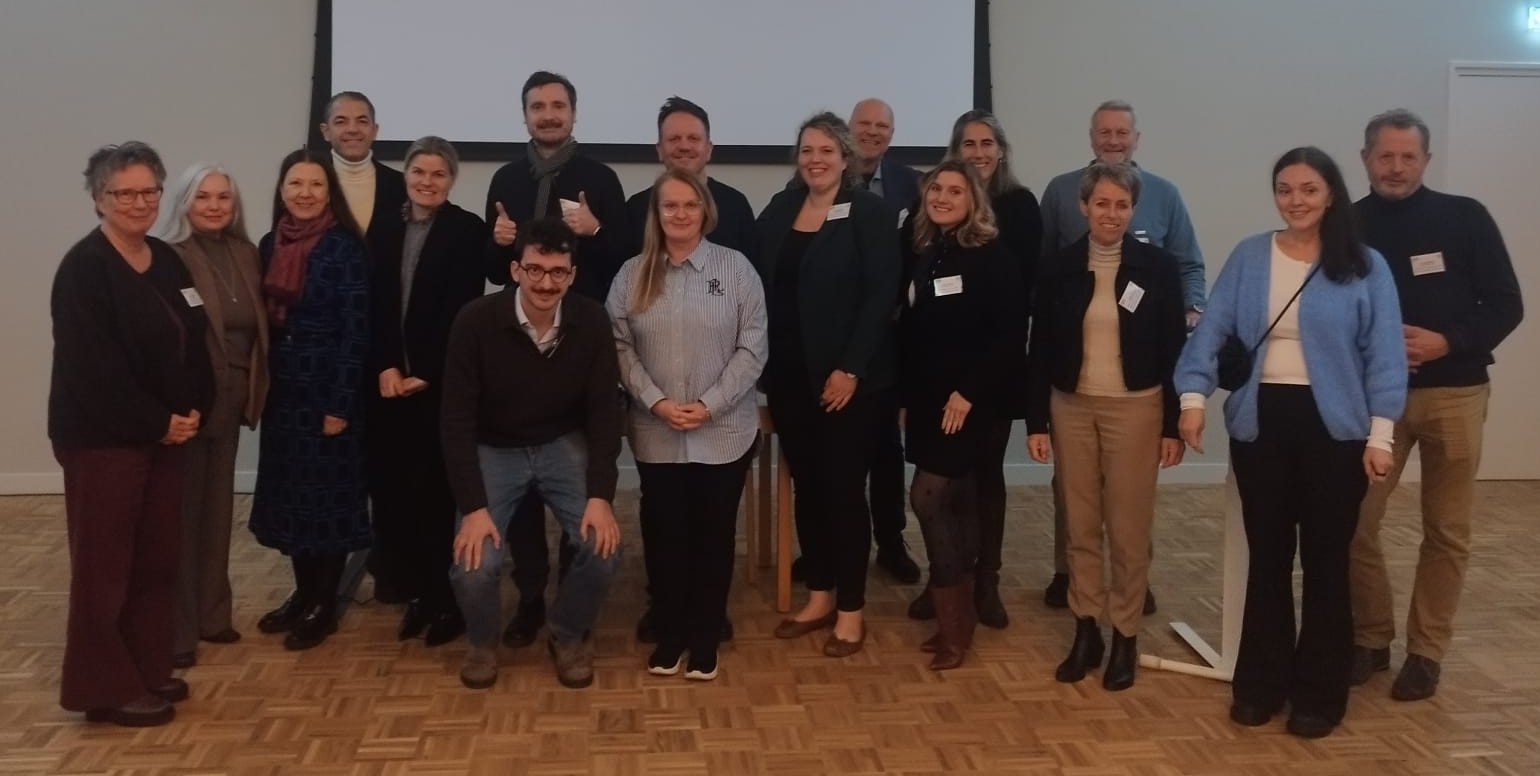
On 3–4 December, HOSPEEM and EPSU held the second workshop of their joint project, Tackling Staff Shortages and Ensuring Future-Proof Skills in Health, in Hilversum, the Netherlands. With strong support from the Nederlandse Vereniging van Ziekenhuizen (NVZ) and the Federatie Nederlandse Vakbeweging (FNV), representatives of employers and trade unions from across Europe met to exchange best practices on the involvement of temporary work agencies in the healthcare sector and on flexible working patterns in their countries. The workshop took place at Zonnenstraal, a historic former sanatorium in Hilversum.

Johan Siegert (FCB) and Niels Mooij (CAOP) delivered a presentation on the labour market for healthcare and Welfare – “AZW programma”, which was followed by the discussion. Marleen Vos opened the session on good practice presentations with the example from Groene Hart Ziekenhuis (GHZ), Gouda (the Netherlands), in which she explained the FIER programme with the activities of the internal flex agency of GHZ. André Renkema from NVZ delivered the presentation on the Care for the North initiative. Kevin Figgis from SIPTU, Ireland, presented an update on the state of temporary work agencies in the country.

On the second day, the workshop featured presentations on the state of play of the topic in Croatia by Maja Malic (HUP) and in Belgium by Myriam De Bruyn (Zorgnet-Icuro). Questions and comments from the participants followed the session.

This workshop was the second of five in the series. An external researcher will provide a summary of the findings.

Sylvie Slangen elected as Secretary General of HOSPEEM

On 20 November the HOSPEEM General Assembly elected Sylvie Slangen as Secretary General. 

Ms Slangen has been involved in HOSPEEM’s activities on behalf of Zorgnet-Icuro since 2020, since 2021 as a member of the Steering Committee. At European level she will be mainly responsible for leading the negotiations with the European Federation of Public Service Unions (EPSU) in the framework of the European Sectoral Social Dialogue Committee for the Hospital Sector as well as representing HOSPEEM at high level meetings and towards the European institutions and other relevant stakeholders. 

At national level Ms Sylvie Slangen represents Zorgnet-Icuro, the Belgian member organisation which represents the Flemish network of care organisations. She has long experience in the field of social dialogue and collective bargaining in the healthcare sector, be it within Belgium, the European hospital sector or the cross-sectoral European Social Dialogue. Since 2017 as Advisor on Human Resources, Organisation and Social Dialogue at Zorgnet-Icuro, she previously worked as Director of the association of Belgian social profit enterprises Unisoc. 

 “It is a privilege to be elected Secretary General of HOSPEEM, and I am sincerely grateful for the trust placed in me by members across Europe. At a moment where our Social Dialogue Committee has just adopted a new Joint Work Programme, I look forward to building on this renewed mandate to strengthen our collective work and deliver concrete outcomes for health and hospital employers. HOSPEEM has a long-standing tradition of constructive, forward-looking social partnership, and I am committed to ensuring that our organisation continues to shape EU policies. In a rapidly evolving health landscape, it is more important than ever that employers’ voices are heard clearly and consistently.” 

HOSPEEM would like to thank Marta Branca for her leadership as Secretary-General since 2021 as well as the Vice-Secretary General since 2018. HOSPEEM is happy to note her continued dedication to HOSPEEM, now as a member of the Steering Committee. Furthermore, HOSPEEM wishes to express its gratitude to its now outgoing Vice-Secretary General John Delamere who has represented the Health Service Executive (HSE Ireland) in HOSPEEM since 2010. 


For further information, please contact the HOSPEEM Secretariat (hospeem@hospeem.eu). 

HOSPEEM Becomes a Recognised Non-State actor at WHO European Region

The WHO Regional Committee for Europe has granted the regional accreditation status of non-state actor to HOSPEEM, the European Hospital and Healthcare Employers’ Association during its 75th session, held  on 28-30 October in Copenhagen, Denmark.

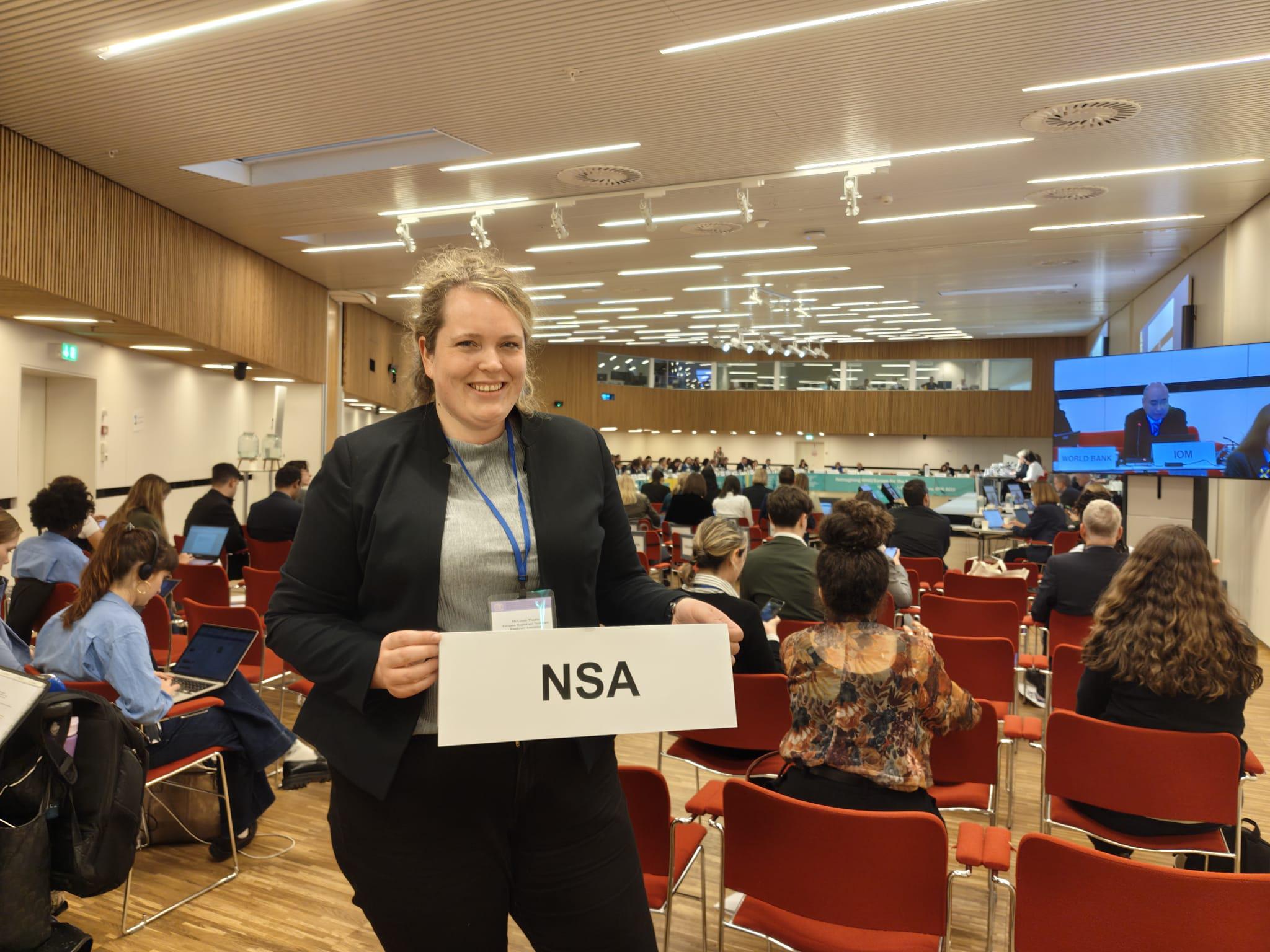
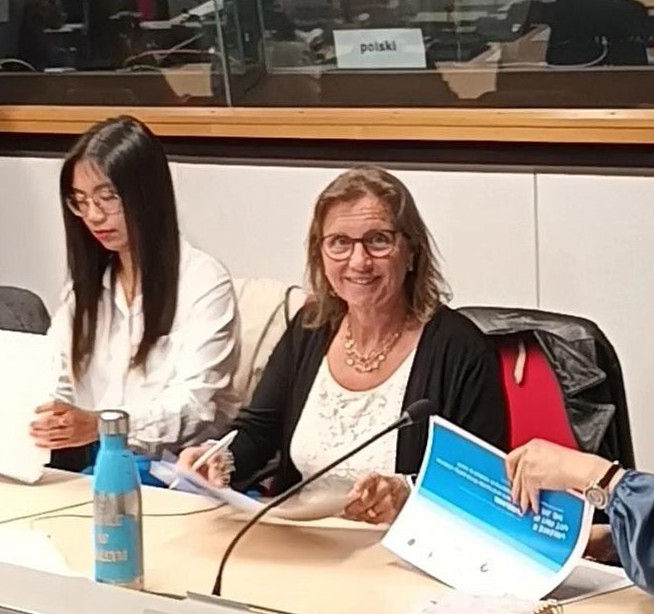
HOSPEEM Senior Policy Advisor Leonie Martin at the 75th session of the WHO Regional Committee for Europe, 28-30 October, Copenhagen, Denmark

WHO engages with non-State actors to strengthen global and regional health systems, including through participation in WHO meetings such as the Regional Committee for Europe, the highest decision-making body in the European Region.

Marta Branca, HOSPEEM Secretary General said:

HOSPEEM values the recognition of the role that social partners play in supporting the work of WHO Europe. Our organisation is keen to contribute to the collaborative efforts aimed at strengthening health systems across the European region.
Gaining non-State Actor status enables us to further support WHO Europe in implementing its newly adopted Second European Work Programme and bring our perspective to the table.

WHO engages with non-State actors to strengthen global and regional health systems, including through participation in WHO meetings such as the Regional Committee for Europe, the highest decision-making body in the European Region.

HOSPEEM’s contributions to the work of WHO Europe will include:

  • Supporting the EU-funded Nursing Action” project;
  • Monitoring and advancing the Framework for Action on the health and care workforce in the WHO European Region 2023-2030;
  • Participating in WHO Europe learning cycles and sharing insights from the European Social Dialogue.

HOSPEEM looks forward to actively collaborating with WHO European Region and other stakeholders to promote resilient, inclusive, and sustainable health systems across the region.

Second Workshop of the Joint Project “Tackling Staff Shortages and Ensuring Future-proofing Skills in Health”

HOSPEEM and EPSU invites you to the second in-person workshop of the joint project on the topic of Temporary Work Agency in the Netherlands


Three o'clock 3 – 4 December 2025

PinCampus Zonnestraal, Loosdrechtse Bos 7B, Hilversum, the Netherlands


The reimbursement for the flight and accommodation is available for the EU participants:

  • Please follow this link to calculate eligible travel costs
  • Maximum reimbursement for accommodation – 133 EUR/night (for up to 2 nights)

The interpretation will be provided for English, French, German, Italian and Dutch


Please register here

The registration deadline is 7 November 2025


Should you have any questions please do not hesitate to contact o.horlach@hospeem.eu

First Workshop on Mental Health and Work-Life Balance of TaSSEFSH Project took place in Copenhagen

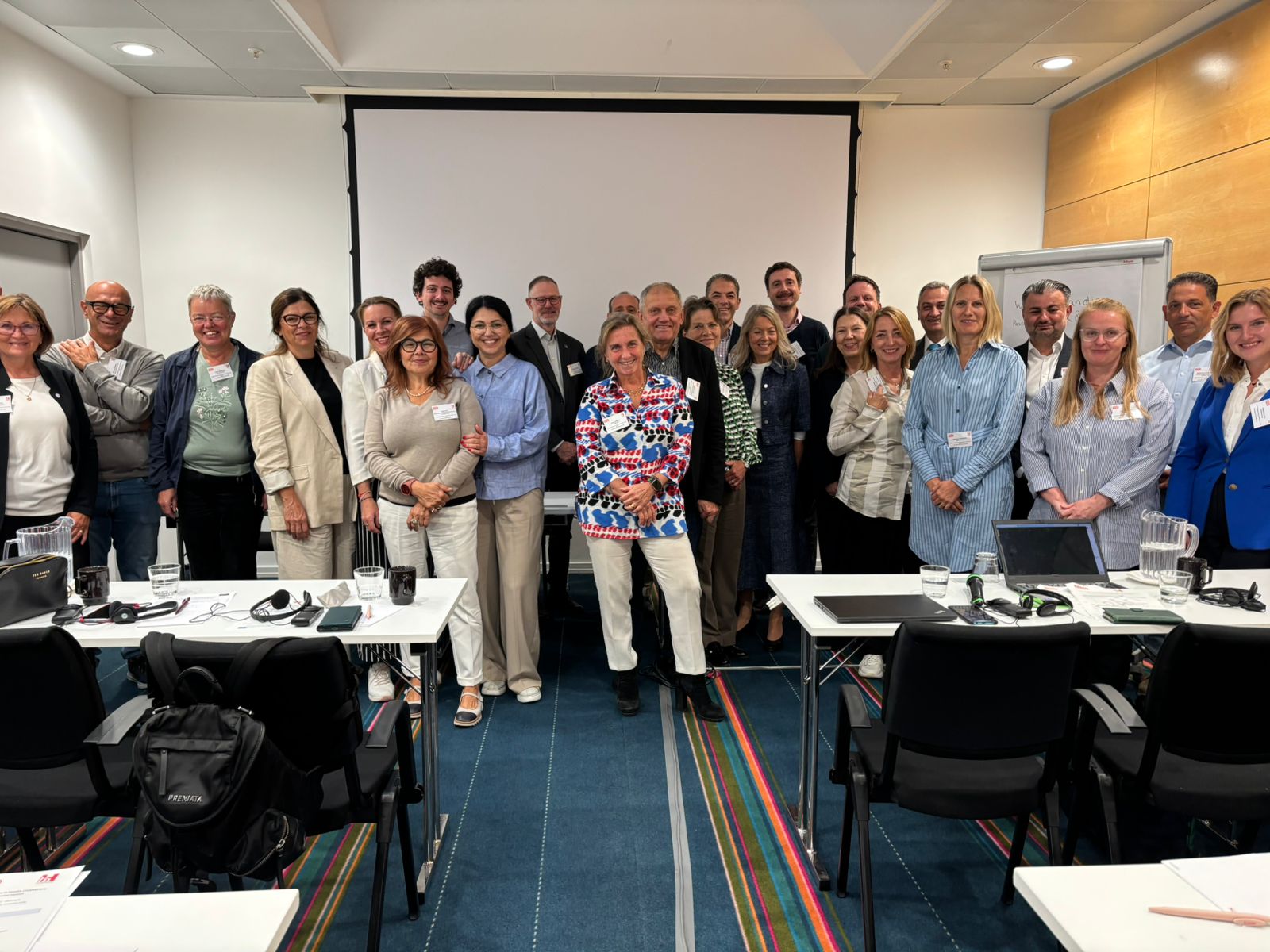
On 25–26 September, HOSPEEM and EPSU held the first workshop of their joint project, Tackling Staff Shortages and Ensuring Future-Proof Skills in Health, in Copenhagen. With strong support from Danske Regioner and Dansk Sygeplejeråd, they brought together representatives of employers and trade unions to exchange good practices on mental health and work–life balance.

The session was opened by representatives from the European Commission and WHO Europe. EU-OSHA also delivered a presentation to frame the discussion.

Anne Grethe Larsen, Director of Næstved, Slagelse and Ringsted Hospitals, presented a project on flexible working hours, which aims to create a sustainable working environment by introducing greater flexibility in work scheduling.

On the second day, the workshop featured a presentation of good practices on mental health from KT, the Finnish employers’ organisation.

This was followed by a presentation on the initiative “Kobling” – aimed at improving the psychological work environment and recognised with the Occupational Health and Safety Award in 2022 – by Sofie Jaspers, a researcher at the National Research Centre for the Working Environment. Afterwards, Daniel Rausner, Director of the Department of HR and Education in Region Hovedstaden, gave a presentation on onboarding practices.

This workshop was the first of five in the series. A summary of the findings will be provided by an external researcher.

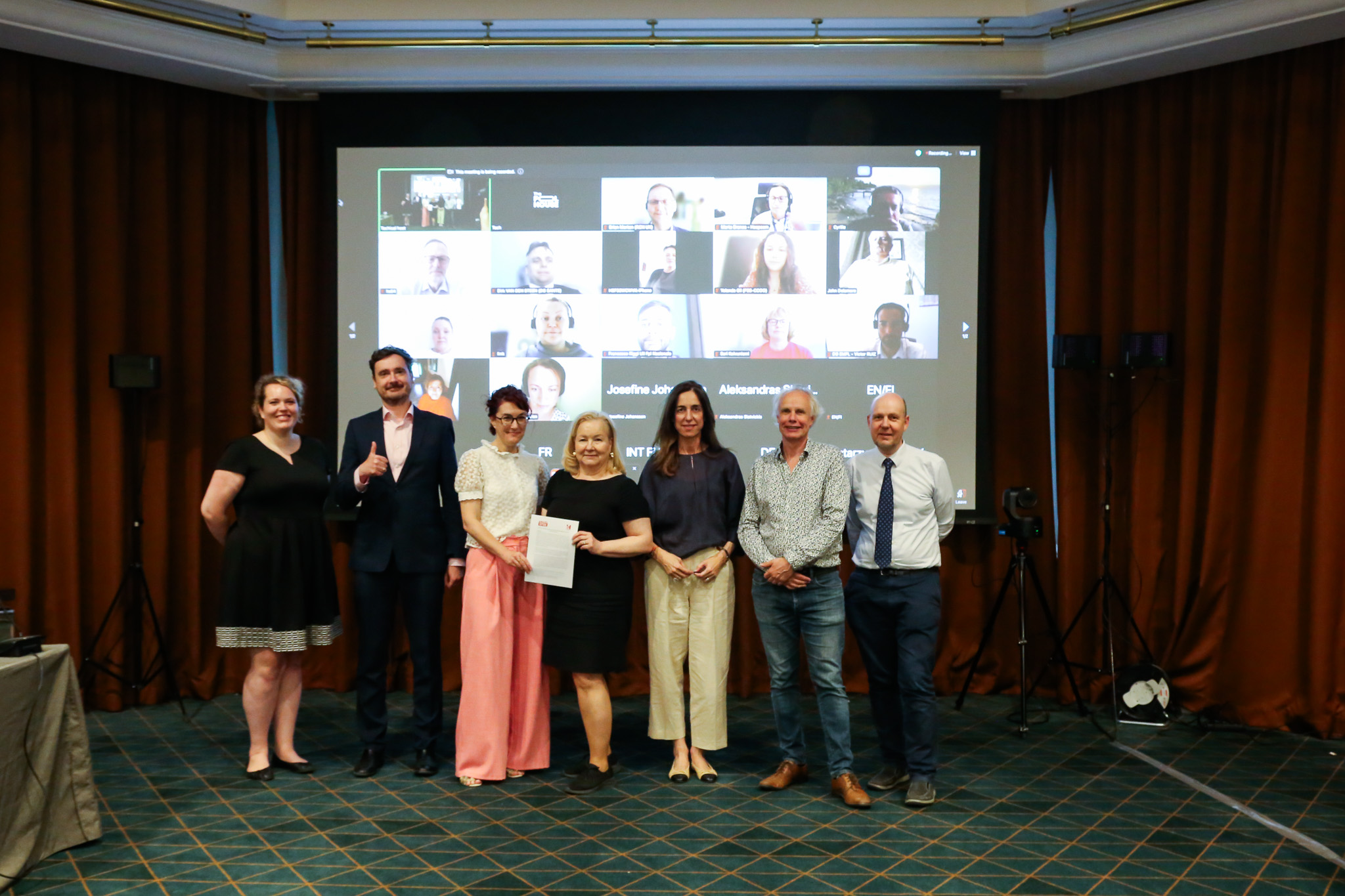
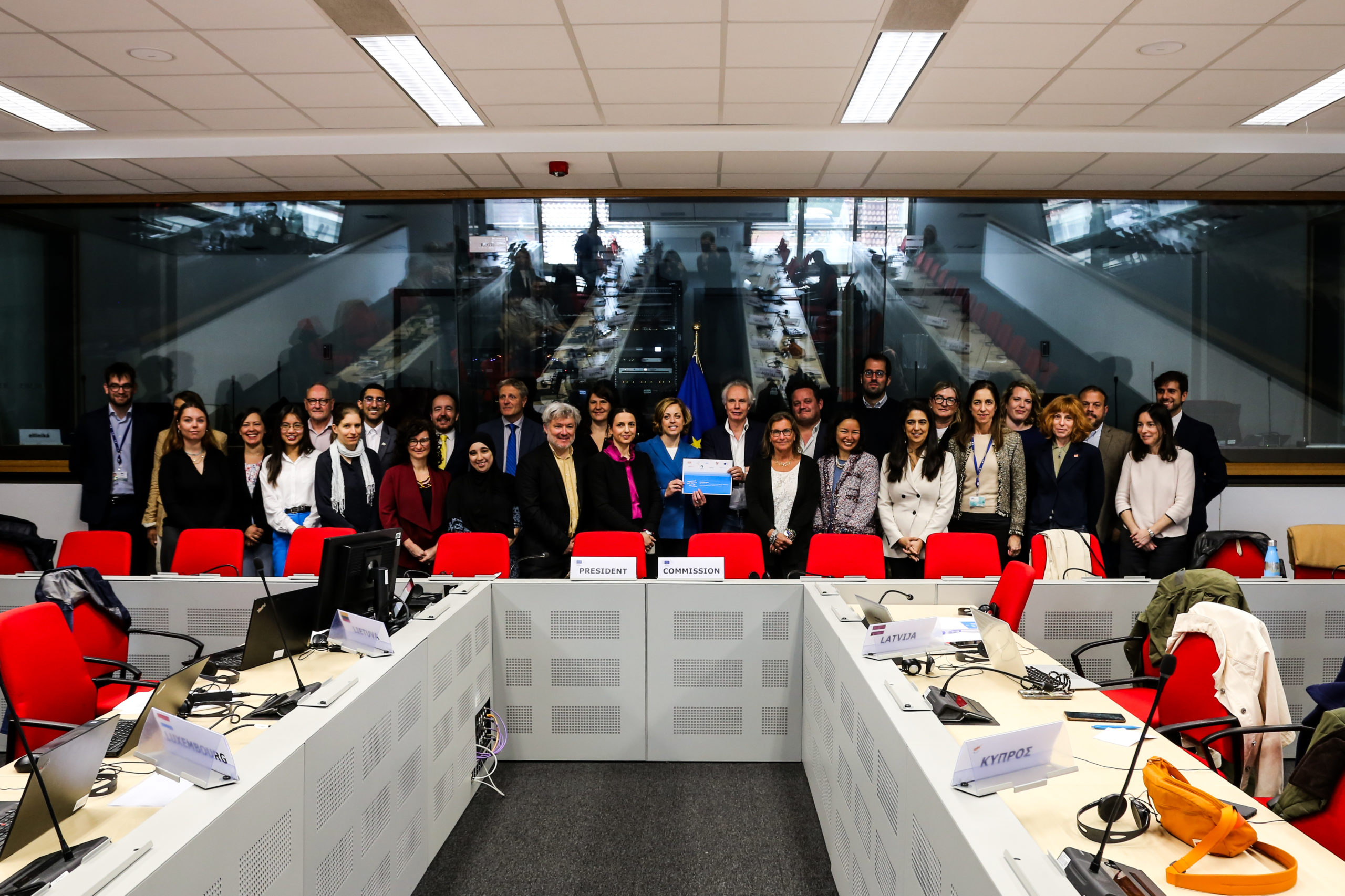
Photo of the signatories of the Joint Policy orientation

EPSU and HOSPEEM sign Joint Policy Orientation to build a resilient European hospital and health sector

Brussels, 13 June 2025 – The European Federation of Public Service Unions (EPSU) and the European Hospital & Healthcare Employers’ Association (HOSPEEM) today sign their Joint Policy Orientation on Creating a Resilient Hospital and Health Sector after the COVID-19 Pandemic. A negotiated process-oriented text that sets common priorities for unions and employers and guides EU decision-makers on future legislation and funding.

Investment, people, and preparedness In the Joint Policy Orientation, the social partners for the hospital sector call for sustained public investment in hospitals and primary care, stressing that “healthcare funding is seen as a long term, ongoing investment rather than an expenditure”. The orientation encourages the Member States to prolong EU4Health in the next EU Multiannual Financial Framework. The Social Partners commit to work together with the support of governments to develop measures to reduce staff shortages, and refer to a wide range of actions to make the total reward package more attractive to workers including but not limiting to wages, work life balance or continuous professional development in line with their updated Framework of Action on Recruitment and Retention. The Social Partners emphasise the importance of diversity and gender equality in the healthcare workforce.

Stronger social dialogue and collective bargaining EPSU and HOSPEEM underline that stronger collective bargaining and early involvement of social partners in EU processes such as the European Semester are essential, especially during crises.

From words to follow-up Both organisations commit to follow-up every three years and to work closely with the European Commission, European Centre for Disease Prevention and Control (ECDC) and Health Emergency Preparedness and Response Authority (HERA) so that resilience remains a policy priority and lessons from COVID-19 are hard-wired into preparedness plans.

Jan Willem Goudriaan, EPSU General Secretary, said: “Our health systems cannot afford another round of austerity. The pandemic taught us that public investment fundamental to the resilience of our societies and economies. This joint policy orientation is a clear message from both workers and employers: investing in healthcare is key to Europe’s preparedness and social partners must be at the table shaping that future.”

Marta Branca, HOSPEEM Secretary General states: “Especially now that the EU places preparedness high on the agenda, it is important to recognise: funding healthcare is not a cost, but a long-term investment in our economy and society. Through the Joint Policy Orientation, we as Social partners are committing to a shared vision to help ensure that hospitals remain safe, adaptive, and sustainable workplaces capable of delivering high-quality care in any circumstance.”

The signing underscores the value of sectoral social dialogue contributing in delivering the European Pillar of Social Rights and the UN Sustainable Development Goals.

The Joint Policy Orientation can be found here.

For more information please contact:

Chloe Kenny ckenny@epsu.org EPSU

Leonie Martin l.martin@hospeem.eu HOSPEEM

The European Commission has also published a press release on the occasion.

HOSPEEM and EPSU participate in the European Social Dialogue as the recognised European Social Partners in the Hospital and Healthcare Sector since 2006. A range of joint documents (declarations, code of conduct, framework of actions, framework agreements) have been adopted and multiple projects and activities have been successfully completed ever since.
European Hospital and Healthcare Employers’ Association https://hospeem.org/
European Federation of Public Service Unions www.epsu.org

First Workshop of the Joint Project “Tackling Staff Shortages and Ensuring Future-proofing Skills in Health”

HOSPEEM and EPSU invites you to the first in-person workshop of the joint project on the topic of Mental Health and Work-Life Balance in Copenhagen, Denmark


Three o'clock 25 – 26 September 2025

PinScandic Copenhagen, Vester Søgade 6, 1602 Copenhagen, Denmark


The reimbursement for the flight and accommodation is available for the EU participants:

  • Please follow this link to calculate eligible travel costs
  • Maximum reimbursement for accommodation – 158 EUR/night (for up to 2 nights)

The interpretation will be provided for English, French, German, Spanish and Danish


Please register here

The registration deadline is 24 August 2025


Should you have any questions please do not hesitate to contact o.horlach@hospeem.eu

Press Release: “Violence is not part of the job!”

Five sectoral social dialogue committees adopt revised guidelines to prevent and tackle third party violence and harassment (TPVH) at the workplace

Brussels 6 May 2025

The European sectoral social partners for Local and Regional Governments, Hospitals and healthcare, Education, Hotels, restaurants and cafés (Hospitality), and Central Governments adopted the updated European Multi-sectoral Guidelines to Prevent and Tackle Third-Party Violence and Harassment Related to Work. This follows a six-month round of negotiations last year with the financial support of the European Commission.

This significant achievement demonstrates the unwavering commitment of the involved social partners to ensuring safe, inclusive, and respectful workplaces across Europe and providing evidence-based guidance to their members including health and safety representatives at work.

The revised Guidelines draw upon ILO Violence and Harassment Convention (No.190), existing policies, and collective agreements at national level to address pressing challenges in light of increased episodes of third-party violence and harassment at work following the COVID-19 pandemic and a changing world of work.

They offer to the trade unions and employers:

· Key elements for a TPVH policy devised by management and workers’ representatives and trade unions, anchored in social dialogue, occupational safety and health, gender equality and non-discrimination with an intersectional approach.

· Practical tools and measures for health risk assessments – for example psychosocial risks and staffing levels-, prevention, and responses, such as social dialogue, awareness raising, training and clear reporting and complaint procedures.

· Definitions and principles on fostering a culture of respect and zero tolerance to violence and harassment including by learning from previous incidents and cooperating with relevant public authorities.

· Remedies to support victims and hold perpetrators accountable, including support and transparent investigations.

· A joint TPVH website with practical examples of policies and collective agreements

Following the adoption, the signatories will disseminate and promote the implementation of the guidelines among their members at the national level including in future collective agreements.

On behalf of the employers’ delegation:

“By concluding these updated guidelines, employers reaffirm their commitment to fostering workplaces where safety and respect are at the core, ensuring that both workers and the services delivered to citizens are protected”, said Fabrizio Rossi, CEMR Secretary General.

On behalf of the trade unions’ delegation:

“Workers should never fear going to work. Violence, including gender-based violence, should never be normalised and deemed part of any job. By underlining that every workplace should have a TPVH policy and, importantly, be sufficiently staffed and resourced to do the job, the Guidelines will contribute to eradicating what has become a major safety and health risk”, said Jan Willem Goudriaan, EPSU General Secretary.


In her speech, Marta Branca, HOSPEEM Secretary General says:

“Updating the guidelines on preventing third-party violence and harassment, reflecting how technology has progressed since the first guidelines as well as introducing a gender-responsive approach, is an important moment for us as social partners in the hospital and healthcare sector. It reflects our shared commitment with trade unions to create safe and supportive working environments .”


For more information, please contact:

CEMR: hamza.bennis@ccre-cemr.org

EPSU: nsalson@epsu.org

HOSPEEM: l.martin@hospeem.eu

CESI: migliori@cesi.org

HOTREC: marta.machado@hotrec.eu

ETUCE: martina.diridolfo@csee-etuce.org

EFEE: monika.hoangthe@educationemployers.eu

EFFAT: v.demoucron@effat.org

EUPAE: carlos.moreno@digital.gob.es


The updated guidelines can be found here (EN)

Call for Tender – Subcontracting external expertise

CALL FOR TENDER: Subcontracting for external expertise Reference Contract of the Commission DLV- 101197678

Date of publication on the HOSPEEM and EPSU website: 08 April 2025

Deadline for submissions: 16 May 2025

Download the Call for tender

Tender Specification

In order to ensure large visibility to this tender, HOSPEEM and EPSU will publish the tender on their websites. This tender will be publicly available for 30 days.

  1. Background:

The recognised European Sectoral Social Partners in the hospital and healthcare sector are EPSU (European Federation of Public Service Unions) and HOSPEEM (European Hospital and Healthcare Employers’ Association). Given the demographic trends in the society, the healthcare sector is facing significant challenges, including an ageing workforce, intra-EU mobility and migration, and the impact of temporary work agencies. Additionally, there is a need for future-proofing skills and career pathways while exploring the potential of digitalisation and artificial intelligence.

The European hospital and healthcare sector is experiencing labour and skills shortages, which have been exacerbated by the demographic changes and COVID-19 pandemic. These shortages are impacting the quality and accessibility of healthcare services across Europe. In response to these challenges, EPSU and HOSPEEM have decided to carrying out a joint project – “Tackling Staff Shortages and Ensuring Future-Proofing Skills in Health”

The project is financially supported by the European Commission, Budget Line SOCPL-2024-SOC-DIALOG – Support for Social Dialogue. It will run for 24 months, starting in April 2025.

The aim of this project is to address the pressing issues of labour and skills shortages and in the European hospital sector. The method will involve a series of workshops which will gather European and national social partners and key stakeholders.

In order to support the project, EPSU and HOSPEEM are seeking the external expertise of (a) consultant(s)/consultancy. The contractor(s) will attend the workshops, gather information on the key challenges, actual or potential solutions, current involvement of the sectoral social partners in addressing the labour and skills shortages.

  1. Tasks to be performed by the contractor

Deliverables:

  • Summary of the second workshop: Attending at the second workshop with the topic of Work-life balance and mental health and summary of the main points of discussion and identification of key challenges and solutions. The report will be at least 5 pages and in English
  • Summary of the third workshop: Attending at the third workshop with the topic of Temporary Work Agency  and summary of the main points of discussion and identification of key challenges and solutions. The report will be at least 5 pages and in English
  • Summary of the fourth workshop: Attending at the fourth workshop with the topic of Digitalisation, future-proofing skills and summary of the main points of discussion and identification of key challenges and solutions. The report will be at least 5 pages and in English
  • Summary of the first workshop, topic:  Attending at the first workshop with the topic of Ageing healthcare workforce, intra-EU mobility and summary of the main points of discussion and identification of key challenges and solutions. The report will be at least 5 pages and in English
  • Summary of the fifth workshop: Attending at the fifth workshop with the topic of Practical solutions in collective bargaining and summary of the main points of discussion and identification of key challenges and solutions. The report will be at least 5 pages and in English
  • Summary of the final conference: Attending at the final conference and summary of the main points of discussion and identification of key challenges and solutions. The report will be at least 5 pages and in English
  • Final report: Attending at the Summary of the main points of discussion and identification of key challenges and solutions. The report will be at least 20 page and in English
  • Final report summary: Attending at the Summary of the final report. The report will be at least 5 pages and in English.

The selected expert will:

  • Identify challenges social partners face regarding – as well as good practices addressing staff shortages in the hospital sector. This should include an analysis of factors such as the ageing workforce, intra-EU mobility and migration, the impact of temporary work agencies, and digitalisation.
  • Write effectively and clearly for the target audiences of trade union members and employers
  • Attend workshops and the final project conference.
  • Deliver the reports from the workshops and from the final conference.

In order to perform the tasks listed above, the subcontracted team will be asked to work in total of 25 days.  The consultant(s) will be supported by EPSU and HOSPEEM secretariats.


  1. Time schedule and reporting

The project duration is from April 2025 and has an expected duration of 48 months. The workshop reports should be prepared within one month after the workshop. A final project report is required by March 2027.


  1. Payments and standard contracts:

The contract will be drawn up between EPSU and the contractor. Payments will be made in three instalments.

The first payment of 25% will be paid upon signing the contract. The second payment of 35% will be paid after the project consortium submits the mid-term report to the commission. Final payment will be made upon completion and submission of the final project report to the Commission.

  • The travel and accommodation expenses for the contractor to attend the project meetings or meeting with the social partners will be covered by the overall travel and accommodation budget of the project.

The accommodation and transfers will be under economy class and according to the travelling chart made by the European Commission which can be found in the Grant Agreement.

Duration of the contract:

The consultant(s) will be engaged to perform the above-mentioned tasks starting in June 2025. The study should be completed by the end of the project (estimated as March 2027) when the results should be presented with the final report.

Expertise required

  • At least 3 years of experience in the field of labour market and industrial relations, with a focus on national and European social dialogue;
  • Knowledge of the European hospital and healthcare sector, with a specific focus on staff shortages,, and the challenges faced by the healthcare workforce and services.
  • Familiarity with issues such as the ageing workforce, intra-EU mobility and migration, skills, the impact of temporary work agencies, work-life balance, and the role of digitalisation in healthcare.
  • Good analytical, communication, and organisational skills to carry out the tasks as specified above. Previous experience or familiarity with the work of (European) Social Partners is preferable.
  • Significant knowledge of carrying out similar tasks in relevant EU projects;
  • Perform the tasks in English. All official deliverables/outcomes/communications produced by the expert shall be made in excellent written English.

Price

The total funding for this work is 30 000,00 EUR (all taxes and charges included).

Selection criteria:

The offers received to the call for tender will be examined by the HOSPEEM and EPSU Secretariats – which can decide to also consult with representatives of EPSU affiliates and HOSPEEM members, where appropriate – based on the following criteria:

The offer received will be examined on the basis of the following criteria:

  • Verifiable expertise, experience and skills, as required and described above;
  • Proven knowledge/evidence track record of research (supported by publications, academic articles, etc.)
  • Respect the budgetary contraints and timeline.


  1. Content presentation of the tender:

Tenders must be written in English. They must be signed by the tenderer or his duly authorised representative and be perfectly legible so that there can be no doubt as to words and figures. Tenders must be clear and concise.

They must make it clear under specific headings that they are able to meet the requirements of the specifications. All tenders must include at least two sections:

i) Technical proposal

The technical proposal must provide all the information needed for the purpose of awarding the contract, including:

  • Description of relevant professional experience with emphasis on the specific fields covered by the invitation to tender;
  • A detailed CV of the tenderer involved in the project activities;
  • Proof of Knowledge of the European hospital and healthcare sector
  • Proof of Knowledge of EU Health and Social Policies
  • Presentation of the methodology and approach that will be taken to the report
  • Previous experience and familiarity with the work of (European) Social Partners and European Social Dialogue Committees

English language proficiency/proficiency to deliver the project outcomes in proficient English.

ii) Financial proposal

Prices of the financial proposal must be quoted in euros, including if the sub-contractor is based in a country which is not in the euro-area. As far as the tenderers of those countries are concerned, they cannot change the amount of the bid because of the evolution of the exchange rate. The tenderers choose the exchange rate and assume all risks or opportunities relating to the rate fluctuation.

Prices shall be fixed and not subject to revision during the performance of the contract.

Award criteria:

Offers must be received within 30 days of the date of publication of this call for tender by EPSU (16 May 2025). Offers must be sent to EPSU in electronic (by email to acociancich@epsu.org).

The contract will be awarded on the basis of the contractor that submits the bid demonstrating the best value for money, taking into account all the selection criteria. No award will be made if the bidders fail to achieve 70% in the evaluation of the bids against the selection criteria. The principles of transparency and equal treatment with a view to avoiding any conflict of interest will be respected.