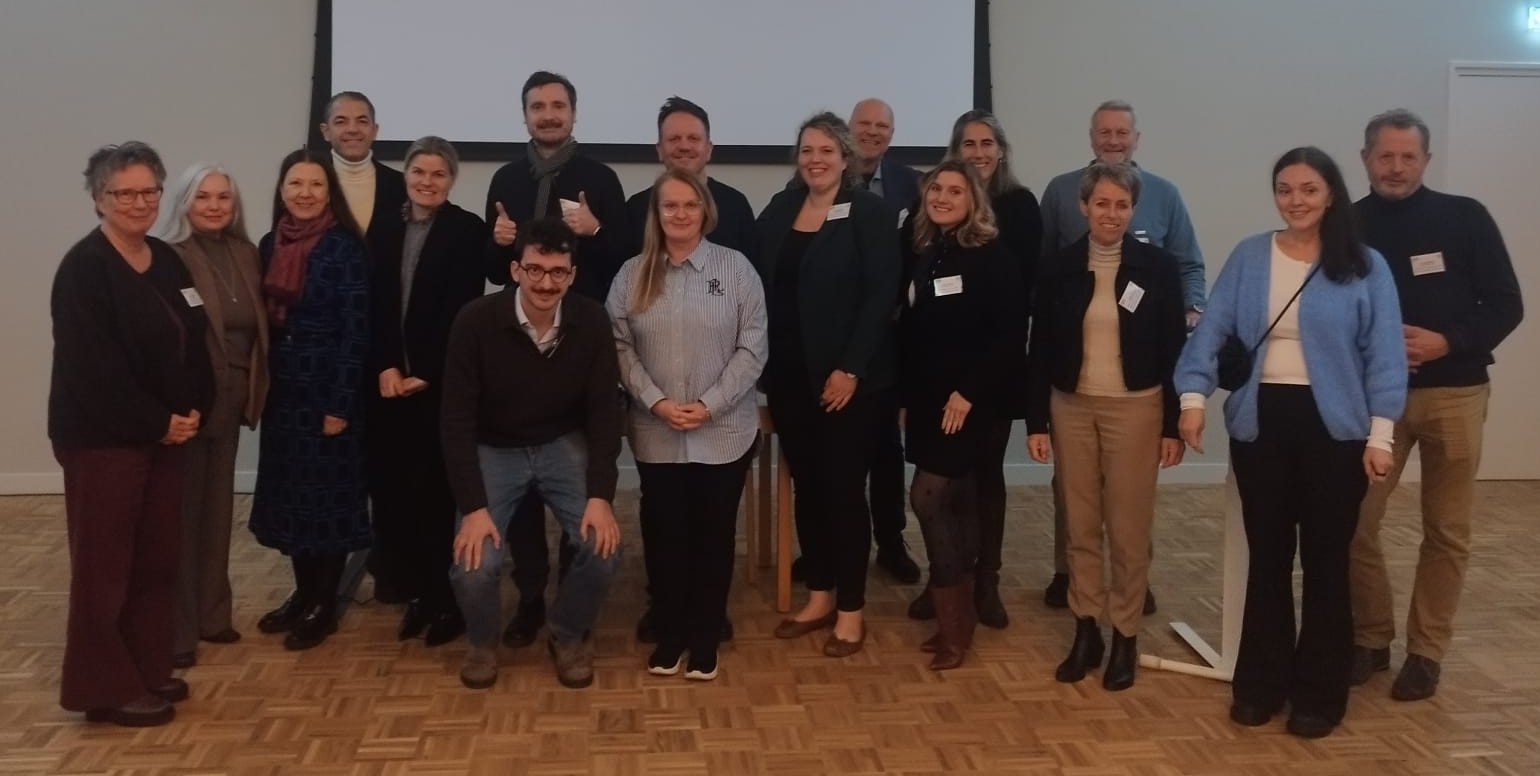
Joint HOSPEEM–EPSU visit with DG EMPL Director-General Mario Nava to UZ Leuven Gasthuisberg

On 27 May, the Director-General of the European Commission’s Directorate-General for Employment, Social Affairs and Inclusion (DG EMPL), Mario Nava, visited the university hospital UZ Leuven Gasthuisberg. The visit was facilitated by the European Hospital and Healthcare Employers’ Association (HOSPEEM) and the European Public Service Union (EPSU) in the context of the European sectoral social dialogue in the hospital and healthcare sector.

The programme was organised by UZ Leuven Gasthuisberg, whose teams ensured a comprehensive and insightful visit. HOSPEEM and EPSU would like to express their appreciation to Gasthuisberg, its management, and the HR and communication teams for the excellent preparation and warm welcome, as well as to Zorgnet-Icuro, and to the local trade union representatives from ACV-CSC and BBTK-ABVV, for their contribution to the programme and exchanges.

The visit brought together representatives of the European Commission, social partners and UZ Leuven/KU Leuven for an exchange on the future of healthcare systems and healthcare work.

Discussions focused on social dialogue at hospital level, approaches to addressing labour shortages through recruitment, retention and working conditions, as well as skills development and training as key enablers for sustainable healthcare systems.

Participants also visited key clinical and training areas, including robotic cardiac surgery, the neonatal intensive care unit, and the STEPS skills centre, highlighting how innovation, advanced care delivery and structured skills training are integrated in daily hospital practice.
The visit provided an opportunity for social partners to engage with DG EMPL on shared priorities for the sector, including workforce sustainability, quality jobs, skills portability and the organisation of resilient healthcare services in a context of growing demand across the European Union.

The discussions underlined the importance of continued dialogue between European institutions, social partners and healthcare providers to support strong, resilient and well-functioning healthcare systems across the European Union.

HOSPEEM and EPSU host EU workshop in Prague on healthcare workforce challenges

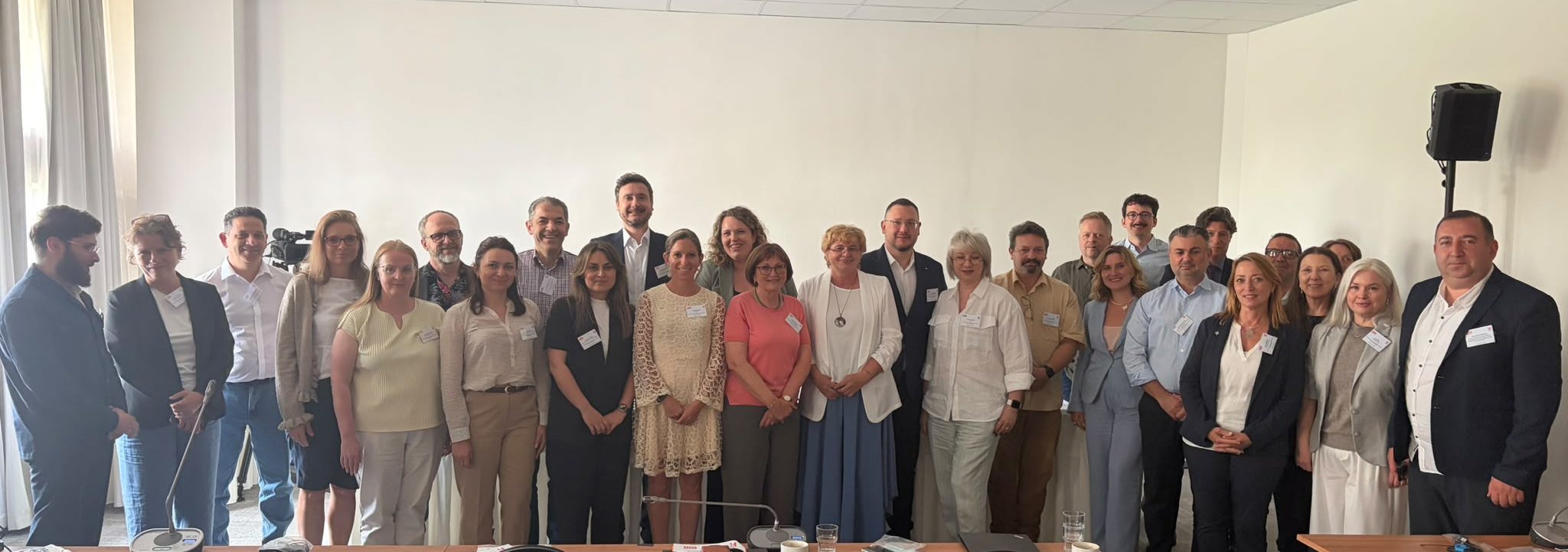
EPSU and HOSPEEM brought together healthcare trade unions, employers, policymakers and experts in Prague on 4-5 June 2026 for the fourth workshop of the EU-funded project “Tackling Staff Shortages and Ensuring Future-proofing Skills in Health”. The workshop focused on the ageing healthcare workforce and intra-EU mobility.

Participants discussed key challenges facing Europe’s health systems, including ongoing staff shortages, demographic change, evolving skills needs, and the retention of healthcare professionals. The exchanges highlighted a range of experiences and good practices from across Europe, with a focus on strengthening workforce planning, resilience and the sustainability of healthcare services.

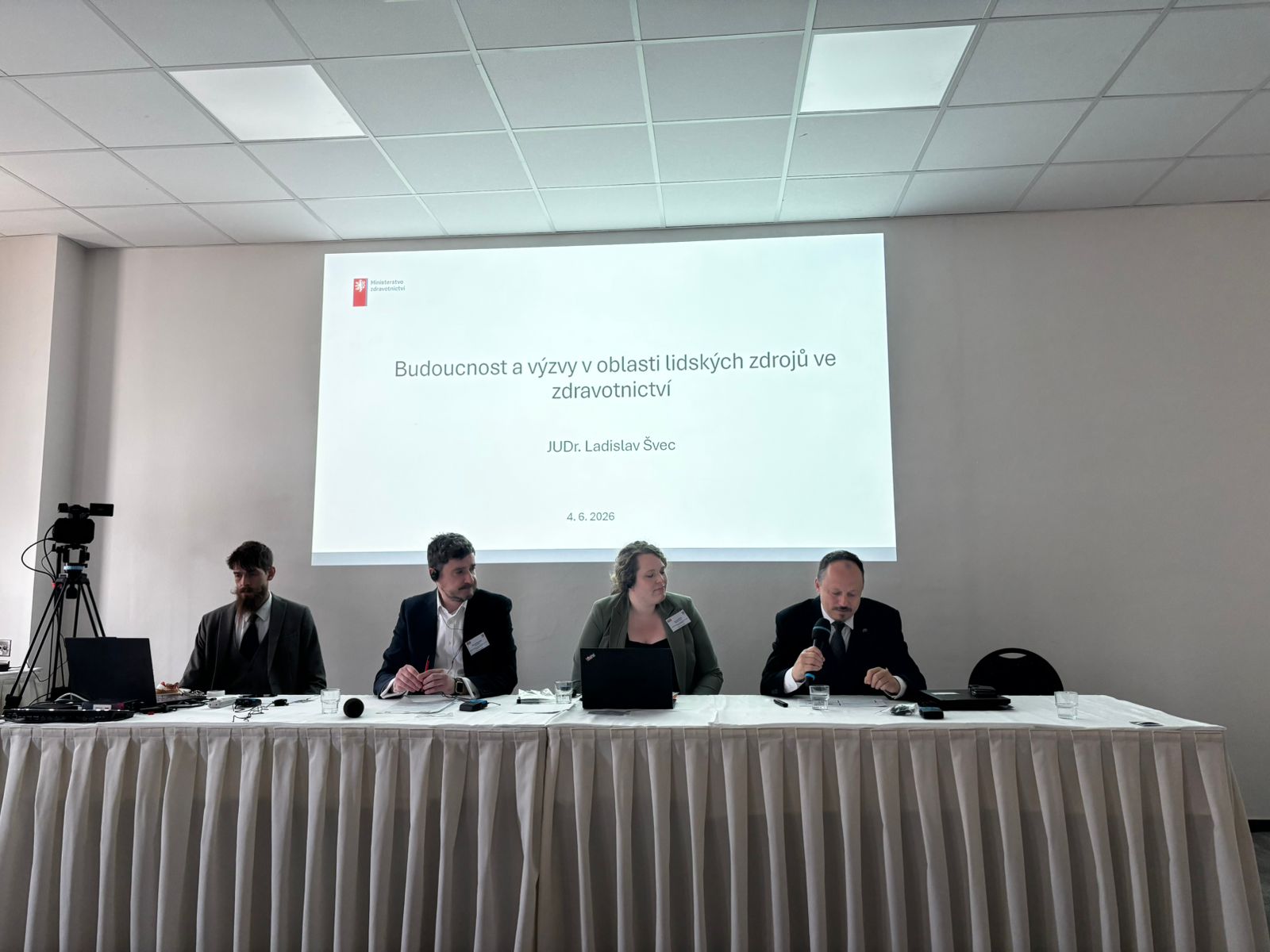
The programme included high-level contributions from Adam Vojtěch, Minister of Health, and Dr Ladislav Švec, First Deputy Minister of Health of the Czech Republic, who addressed the future challenges of human resources in healthcare. Ms Yana Andersen from the WHO Regional Office for Europe (Health Workforce and Service Delivery) and Ms Maren Hopfe from the International Labour Organization (ILO), Labour Governance and Sectoral Policies Department presented the state of play on the ageing of the healthcare workforce and the report on Health workforce migration in the WHO European Region.

Presentation by Dr. Ladislav Švec, First Deputy Minister of Health of the Czech Republic

The workshop also brought together representatives from social partner organisations and stakeholders from amongst others Sweden, Finland, Romania, Ukraine and the Czech Republic, who shared national and sectoral perspectives on workforce developments and policy responses.

EPSU and HOSPEEM would like to thank the Confederation of Employers’ and Entrepreneurs’ Associations of the Czech Republic (UZS-CR) and the Trade Union of Health and Social Care Workers of the Czech Republic (OSZSP CR) for their hosting and support in organising the workshop.

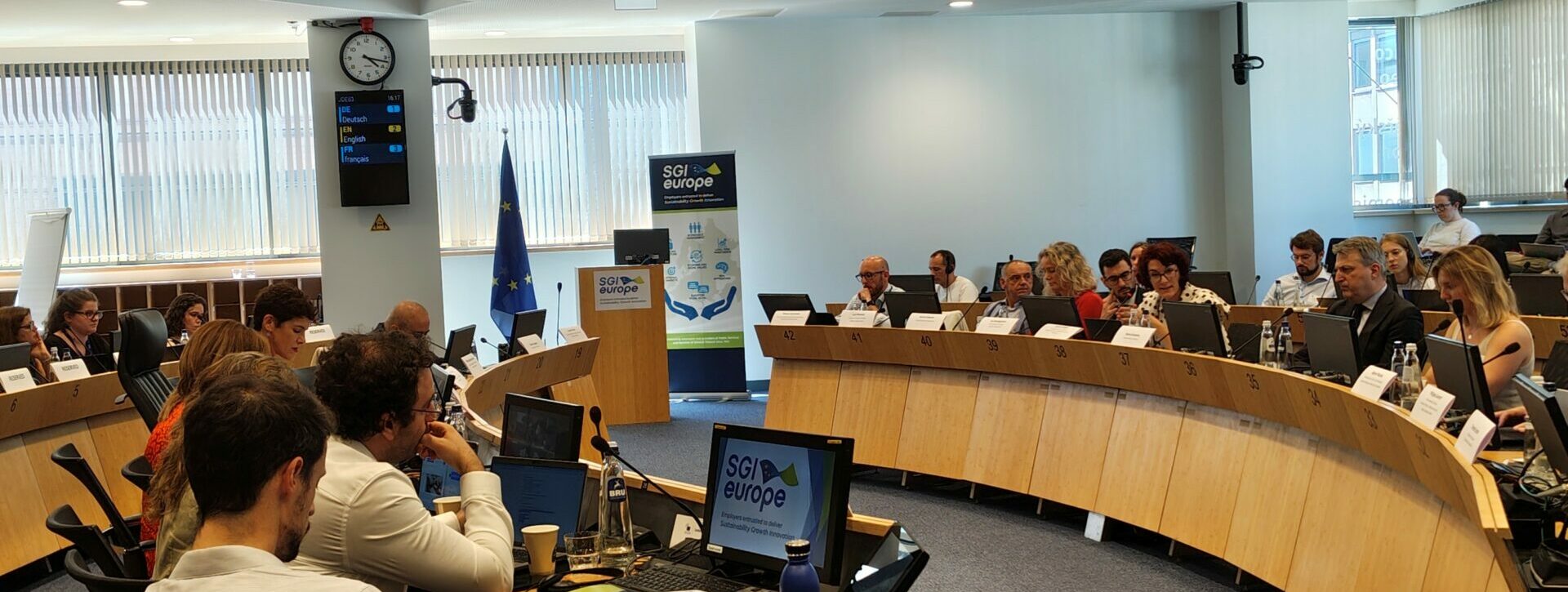
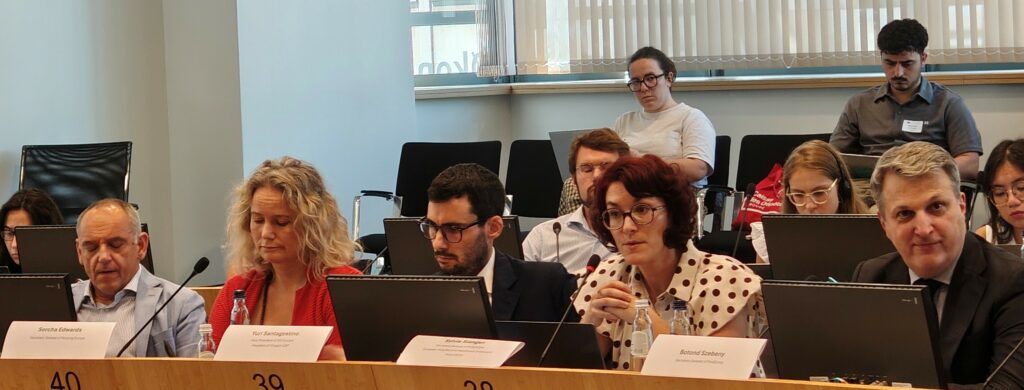
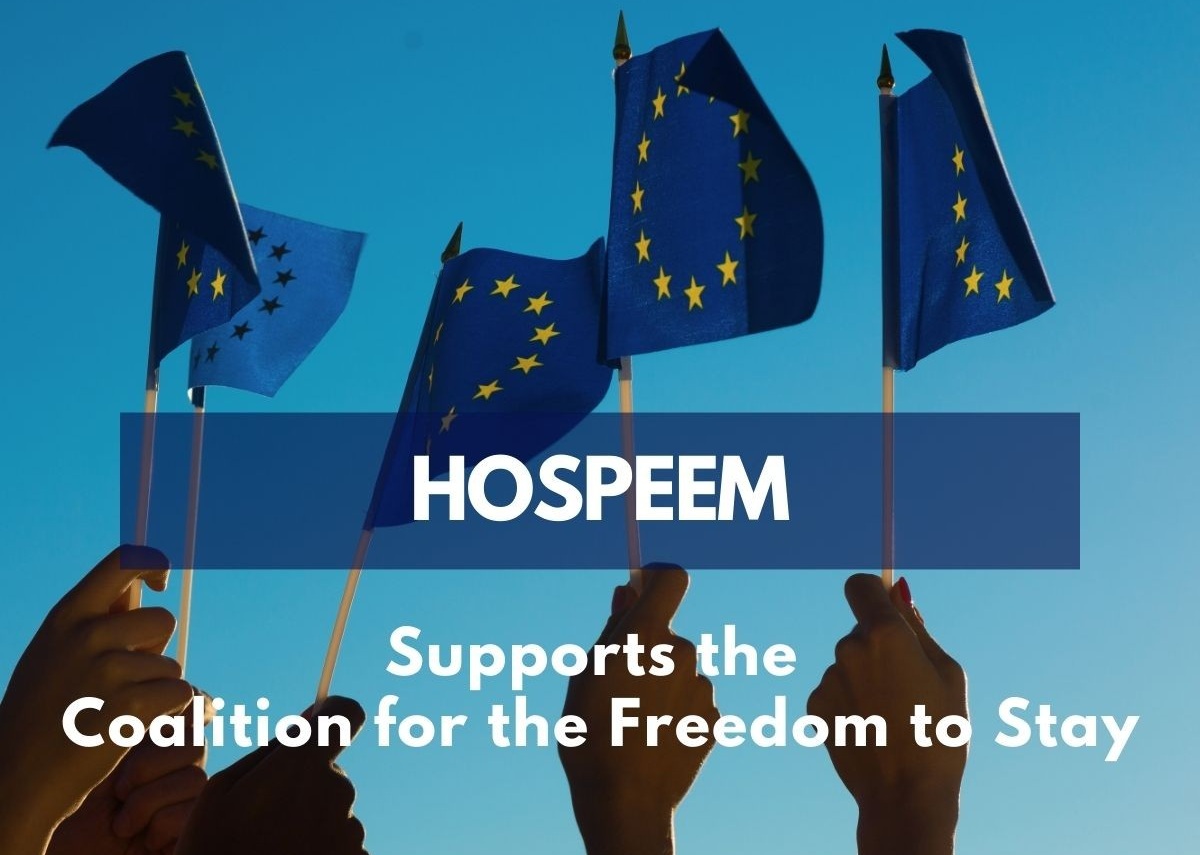
HOSPEEM signs the Call for action on Freedom to Stay by the SGI Network

Freedom to Stay: delivering the Single Market where people feel at home

Europe did not build the Single Market alone. From the outset, market integration was paired with cohesion policy so that prosperity could extend beyond capitals and core regions. That balance created trust, legitimacy, and shared progress in the European Union.

Today, that balance is under strain. Too many citizens experience the Single Market as working primarily for those who can move easily, while others feel compelled to leave their communities to access jobs, housing, or essential services. More than thirty years after its creation, the Single Market faces a simple but decisive test of credibility: can people rely on it to build a life where they feel at home, regardless of their location?

When territories lose access to essential services, people, jobs, companies and SMEs,, investments, and confidence soon follow. If opportunity continues to concentrate in a limited number of places, Europe risks drifting into a two-speed reality, regardless of its shared values and Treaty commitments.

Freedom to Stay: strengthening the Single Market from the ground up
The freedom to stay is not about limiting mobility. It is about making mobility a choice, not a necessity. It strengthens the Single Market by reconnecting competitiveness, territorial and social cohesion. It enables Europe to produce, innovate, and invest everywhere, because every place offers the foundations that citizens and businesses need, including reliable, accessible, affordable and high-quality services of general interest, skilled workers and strong local cohesion.

Services of General Interest (SGIs) sit at the heart of this vision. Access to affordable and high-quality SGIs is a fundamental right under the European Pillar of Social Rights and a shared EU value under Article 14 TFEU and Protocol No. 26. High-quality, affordable, and universal SGIs are not only pillars of social and territorial cohesion: They are structural assets for Europe’s competitiveness, resilience, and democratic trust.

A call for action to turn the Freedom to Stay into a reality
With this pledge the signatories want to address shared and systemic challenges: persistent investment gaps, skills shortages, digital transitions that risk widening territorial and social divides, demographic ageing, infrastructure deficits, regulatory fragmentation, and funding models that remain short-term or misaligned with the missions of SGIs.

Together, we speak with one voice: the Single Market requires a strong social and territorial foundation to deliver industrial ambition, demographic resilience, and public trust.

This pledge calls for:

1. Integrating the Freedom to Stay into the next Cohesion Policy cycle and the next Multiannual Financial Framework as a guiding objective.

2. Creating a “Freedom to Stay” indicator, designed to complement the European Semester and translate cohesion and SGI objectives into measurable outcomes.

3. Co-designing a European Action Plan on Services of General Interest, to deliver concrete follow-up to the Letta Report by developing a holistic Action Plan on SGIs.

Transforming the pledge into an EU-wide alliance
This pledge is a starting point of a broader alliance the signatories aim to create around the concept of Freedom to Stay, embracing all those parts of the economy and society who believe that this freedom should be an essential feature of a modern and inclusive Internal Market.

Find more on www.freedomtostay.eu

Second Workshop on the Temporary Work Agency of the Joint HOSPEEM-EPSU TaSSEFSH Project

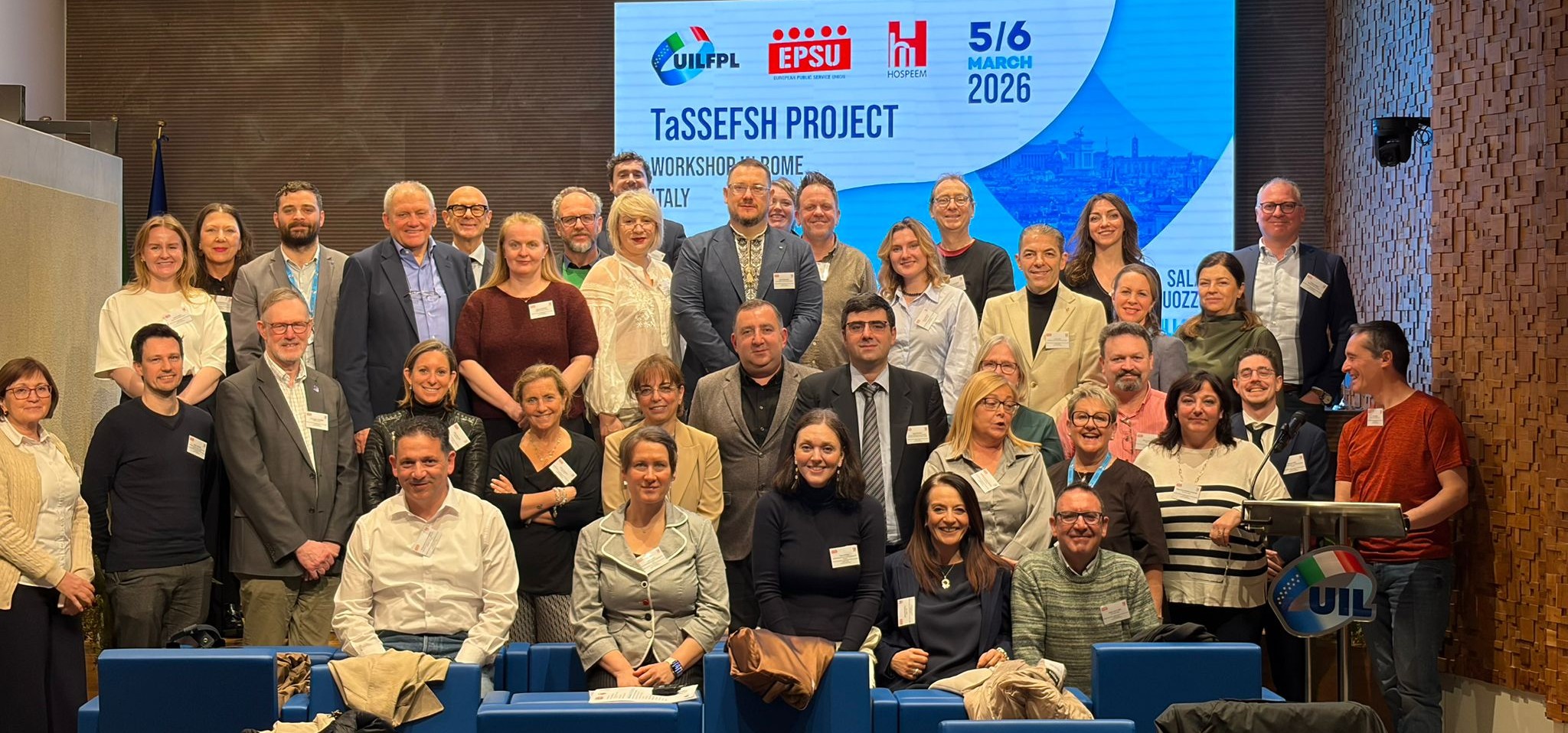
On 3–4 December, HOSPEEM and EPSU held the second workshop of their joint project, Tackling Staff Shortages and Ensuring Future-Proof Skills in Health, in Hilversum, the Netherlands. With strong support from the Nederlandse Vereniging van Ziekenhuizen (NVZ) and the Federatie Nederlandse Vakbeweging (FNV), representatives of employers and trade unions from across Europe met to exchange best practices on the involvement of temporary work agencies in the healthcare sector and on flexible working patterns in their countries. The workshop took place at Zonnenstraal, a historic former sanatorium in Hilversum.

Johan Siegert (FCB) and Niels Mooij (CAOP) delivered a presentation on the labour market for healthcare and Welfare – “AZW programma”, which was followed by the discussion. Marleen Vos opened the session on good practice presentations with the example from Groene Hart Ziekenhuis (GHZ), Gouda (the Netherlands), in which she explained the FIER programme with the activities of the internal flex agency of GHZ. André Renkema from NVZ delivered the presentation on the Care for the North initiative. Kevin Figgis from SIPTU, Ireland, presented an update on the state of temporary work agencies in the country.

On the second day, the workshop featured presentations on the state of play of the topic in Croatia by Maja Malic (HUP) and in Belgium by Myriam De Bruyn (Zorgnet-Icuro). Questions and comments from the participants followed the session.

This workshop was the second of five in the series. An external researcher will provide a summary of the findings.

Sylvie Slangen elected as Secretary General of HOSPEEM

On 20 November the HOSPEEM General Assembly elected Sylvie Slangen as Secretary General. 

Ms Slangen has been involved in HOSPEEM’s activities on behalf of Zorgnet-Icuro since 2020, since 2021 as a member of the Steering Committee. At European level she will be mainly responsible for leading the negotiations with the European Federation of Public Service Unions (EPSU) in the framework of the European Sectoral Social Dialogue Committee for the Hospital Sector as well as representing HOSPEEM at high level meetings and towards the European institutions and other relevant stakeholders. 

At national level Ms Sylvie Slangen represents Zorgnet-Icuro, the Belgian member organisation which represents the Flemish network of care organisations. She has long experience in the field of social dialogue and collective bargaining in the healthcare sector, be it within Belgium, the European hospital sector or the cross-sectoral European Social Dialogue. Since 2017 as Advisor on Human Resources, Organisation and Social Dialogue at Zorgnet-Icuro, she previously worked as Director of the association of Belgian social profit enterprises Unisoc. 

 “It is a privilege to be elected Secretary General of HOSPEEM, and I am sincerely grateful for the trust placed in me by members across Europe. At a moment where our Social Dialogue Committee has just adopted a new Joint Work Programme, I look forward to building on this renewed mandate to strengthen our collective work and deliver concrete outcomes for health and hospital employers. HOSPEEM has a long-standing tradition of constructive, forward-looking social partnership, and I am committed to ensuring that our organisation continues to shape EU policies. In a rapidly evolving health landscape, it is more important than ever that employers’ voices are heard clearly and consistently.” 

HOSPEEM would like to thank Marta Branca for her leadership as Secretary-General since 2021 as well as the Vice-Secretary General since 2018. HOSPEEM is happy to note her continued dedication to HOSPEEM, now as a member of the Steering Committee. Furthermore, HOSPEEM wishes to express its gratitude to its now outgoing Vice-Secretary General John Delamere who has represented the Health Service Executive (HSE Ireland) in HOSPEEM since 2010. 


For further information, please contact the HOSPEEM Secretariat (hospeem@hospeem.eu). 

HOSPEEM Becomes a Recognised Non-State actor at WHO European Region

The WHO Regional Committee for Europe has granted the regional accreditation status of non-state actor to HOSPEEM, the European Hospital and Healthcare Employers’ Association during its 75th session, held  on 28-30 October in Copenhagen, Denmark.

HOSPEEM Senior Policy Advisor Leonie Martin at the 75th session of the WHO Regional Committee for Europe, 28-30 October, Copenhagen, Denmark

WHO engages with non-State actors to strengthen global and regional health systems, including through participation in WHO meetings such as the Regional Committee for Europe, the highest decision-making body in the European Region.

Marta Branca, HOSPEEM Secretary General said:

HOSPEEM values the recognition of the role that social partners play in supporting the work of WHO Europe. Our organisation is keen to contribute to the collaborative efforts aimed at strengthening health systems across the European region.
Gaining non-State Actor status enables us to further support WHO Europe in implementing its newly adopted Second European Work Programme and bring our perspective to the table.

WHO engages with non-State actors to strengthen global and regional health systems, including through participation in WHO meetings such as the Regional Committee for Europe, the highest decision-making body in the European Region.

HOSPEEM’s contributions to the work of WHO Europe will include:

  • Supporting the EU-funded Nursing Action” project;
  • Monitoring and advancing the Framework for Action on the health and care workforce in the WHO European Region 2023-2030;
  • Participating in WHO Europe learning cycles and sharing insights from the European Social Dialogue.

HOSPEEM looks forward to actively collaborating with WHO European Region and other stakeholders to promote resilient, inclusive, and sustainable health systems across the region.

First Workshop on Mental Health and Work-Life Balance of TaSSEFSH Project took place in Copenhagen

On 25–26 September, HOSPEEM and EPSU held the first workshop of their joint project, Tackling Staff Shortages and Ensuring Future-Proof Skills in Health, in Copenhagen. With strong support from Danske Regioner and Dansk Sygeplejeråd, they brought together representatives of employers and trade unions to exchange good practices on mental health and work–life balance.

The session was opened by representatives from the European Commission and WHO Europe. EU-OSHA also delivered a presentation to frame the discussion.

Anne Grethe Larsen, Director of Næstved, Slagelse and Ringsted Hospitals, presented a project on flexible working hours, which aims to create a sustainable working environment by introducing greater flexibility in work scheduling.

On the second day, the workshop featured a presentation of good practices on mental health from KT, the Finnish employers’ organisation.

This was followed by a presentation on the initiative “Kobling” – aimed at improving the psychological work environment and recognised with the Occupational Health and Safety Award in 2022 – by Sofie Jaspers, a researcher at the National Research Centre for the Working Environment. Afterwards, Daniel Rausner, Director of the Department of HR and Education in Region Hovedstaden, gave a presentation on onboarding practices.

This workshop was the first of five in the series. A summary of the findings will be provided by an external researcher.

ILO Visit to HOSPEEM

On 2 July 2025, the International Labour Organization (ILO) Equality Unit visited HOSPEEM premises for a knowledge exchange session.

Discussions focused on HOSPEEM’s work promoting equality, non-discrimination, and addressing workplace violence and harassment in the healthcare sector. Particular attention was given to the recently updated guidelines on third-party violence and harassment (TPVH), highlighting key outcomes and lessons learned from the related multi-sectoral project. The exchange provided an opportunity to share experiences on implementing ILO Conventions and explore common challenges and emerging trends in Europe, reinforcing cooperation between both organisations in advancing inclusive and safe working environments.

Photo of the signatories of the Joint Policy orientation

EPSU and HOSPEEM sign Joint Policy Orientation to build a resilient European hospital and health sector

Brussels, 13 June 2025 – The European Federation of Public Service Unions (EPSU) and the European Hospital & Healthcare Employers’ Association (HOSPEEM) today sign their Joint Policy Orientation on Creating a Resilient Hospital and Health Sector after the COVID-19 Pandemic. A negotiated process-oriented text that sets common priorities for unions and employers and guides EU decision-makers on future legislation and funding.

Investment, people, and preparedness In the Joint Policy Orientation, the social partners for the hospital sector call for sustained public investment in hospitals and primary care, stressing that “healthcare funding is seen as a long term, ongoing investment rather than an expenditure”. The orientation encourages the Member States to prolong EU4Health in the next EU Multiannual Financial Framework. The Social Partners commit to work together with the support of governments to develop measures to reduce staff shortages, and refer to a wide range of actions to make the total reward package more attractive to workers including but not limiting to wages, work life balance or continuous professional development in line with their updated Framework of Action on Recruitment and Retention. The Social Partners emphasise the importance of diversity and gender equality in the healthcare workforce.

Stronger social dialogue and collective bargaining EPSU and HOSPEEM underline that stronger collective bargaining and early involvement of social partners in EU processes such as the European Semester are essential, especially during crises.

From words to follow-up Both organisations commit to follow-up every three years and to work closely with the European Commission, European Centre for Disease Prevention and Control (ECDC) and Health Emergency Preparedness and Response Authority (HERA) so that resilience remains a policy priority and lessons from COVID-19 are hard-wired into preparedness plans.

Jan Willem Goudriaan, EPSU General Secretary, said: “Our health systems cannot afford another round of austerity. The pandemic taught us that public investment fundamental to the resilience of our societies and economies. This joint policy orientation is a clear message from both workers and employers: investing in healthcare is key to Europe’s preparedness and social partners must be at the table shaping that future.”

Marta Branca, HOSPEEM Secretary General states: “Especially now that the EU places preparedness high on the agenda, it is important to recognise: funding healthcare is not a cost, but a long-term investment in our economy and society. Through the Joint Policy Orientation, we as Social partners are committing to a shared vision to help ensure that hospitals remain safe, adaptive, and sustainable workplaces capable of delivering high-quality care in any circumstance.”

The signing underscores the value of sectoral social dialogue contributing in delivering the European Pillar of Social Rights and the UN Sustainable Development Goals.

The Joint Policy Orientation can be found here.

For more information please contact:

Chloe Kenny ckenny@epsu.org EPSU

Leonie Martin l.martin@hospeem.eu HOSPEEM

The European Commission has also published a press release on the occasion.

HOSPEEM and EPSU participate in the European Social Dialogue as the recognised European Social Partners in the Hospital and Healthcare Sector since 2006. A range of joint documents (declarations, code of conduct, framework of actions, framework agreements) have been adopted and multiple projects and activities have been successfully completed ever since.
European Hospital and Healthcare Employers’ Association https://hospeem.org/
European Federation of Public Service Unions www.epsu.org

Final conference of the Finance4EPSR project

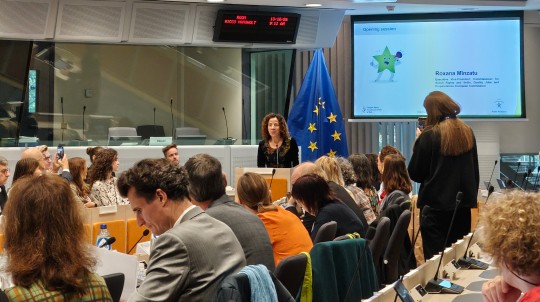
The Finance4EPSR project was concluded with its final conference.

As a project partner, HOSPEEM actively contributed to the successful implementation and conclusion of the project, led by SGI Europe. The project aimed to strengthen the social dimension of sustainable finance and enhance the capacity of services of general interest (SGIs) to access socially responsible investment.

Throughout the project, HOSPEEM supported the development of a practical methodology for non-financial reporting on social objectives, helping SGI providers better identify and communicate their social impact. This work also contributed to improving understanding of the potential application of a social taxonomy in essential sectors such as healthcare.

The final conference on 11 June 2025 marked an important milestone, presenting key results and tools designed to support SGIs in attracting sustainable finance. It also provided a platform for dialogue among EU institutions, social partners, and financial actors on future policy developments.