European organisations agree on measures to counter workplace violence

Press release

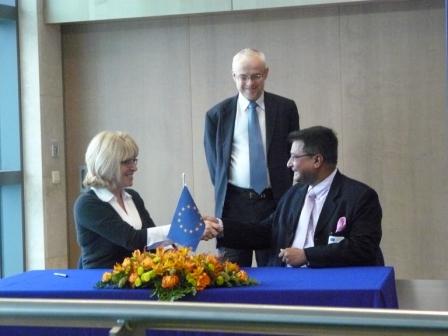
Eight European organisations of social partners have today adopted joint Guidelines setting out the practical steps that can be taken by employers, workers and trade unions to tackle problems of thirdparty violence in a range of different service sectors. The guidelines have been agreed by CEMR, CoESS, EFEE, EPSU, ETUCE, EuroCommerce, HOSPEEM and UNI Europa, all sectors which face the challenge of violence originating from members of the public.

The European Working Conditions Survey shows that almost one in ten workers in the EU report having suffered violence, bullying or harassment at work in the previous year (results 2005 survey).
According to the survey, carried out by the European Foundation for the Improvement of Living and Working Conditions, third party violence at the hands of clients, customers or patients is more common than violence from work colleagues. Threats of violence and actual violence from third parties are most common in a variety of sectors.

The eight sectors are increasingly concerned about the impact of such violence since it not only undermines the health and dignity of individual workers, but also has a very real economic impact in terms of absences from the workplace, morale and staff turnover.

The Guidelines are the outcome of a two-year process supported by the European Commission to assess the issues through research, workshops and the exchange of best practices.The Guidelines aim to:

– Increase awareness and understanding of employers, workers, their representatives and other public authorities (e.g. health and safety agencies, police, etc) of the issue of third party violence
– Demonstrate the commitment of social partners to working together and sharing experiences and good practice to help prevent and manage problems of harassment and/or violence instigated by third parties and reduce the impact on employees’ health and well-being, sickness absence and productivity.
– Provide employers, workers and their representatives at all levels with Guidelines to identify, prevent manage and tackle problems of work related harassment and violence instigated by third parties.

The Guidelines complement the cross-sectoral agreement on violence and harassment at work, adopted in 20074.

CEMR, CoESS, EFEE, EPSU, ETUCE, EuroCommerce, HOSPEEM and UNI Europa will work together to implement the Guidelines in all member states.

FULL TEXT: Multisectoral Guidelines Signed

(FULL TEXT also available in FR/DE/BG/CZ/DK/EE/EL/ES/FI/HU/IT/LT/NL/PL/PT/RO/RU/SK/SL)

Press release: Press Release Signature guidelines 30 Sept 2010

Multi-sectoral guidelines to tackle third-party violence and harassment related to work

Eight European Sectoral Social Partners; HOSPEEM, CEMR, CoESS, EFEE, EuroCommerce, EPSU, UNI Europa and ETUCE reached an agreement on a set of “Multi-sectoral Guidelines to Tackle Third-Party Violence and Harassment related to Work” on 16 July 2010.

The social partners from Central Government Administration (Trade Union’s National and European Delegation – TUNED and European Public Administration Employers – EUPAE) added their signatures to the Multisectoral Guidelines on 17 December 2018, at the Liaison Forum in Brussels. Find the press release here

The aim of the Guidelines is to ensure that that each workplace has a results-oriented policy which addresses the issue of third-party violence. The Guidelines set out the practical steps that can be taken by employers, workers and their representatives /trade unions to reduce, prevent and mitigate problems. The steps reflect the best practices developed in our sectors and they can be complemented by more specific and/or additional measures.

According to EU and national law, both employers and workers have obligations in the field of health and safety. Although, the duty to ensure the health and safety of workers in every aspect related to the work lies with the employer, the employees also have a responsibility to take care, as far as possible, of their own health and safety and that of other persons affected by their actions at work, in accordance with their training and the instructions given by their employer. Employers also have an obligation to consult workers and/or their representatives and allow them to take part on all questions relating to health and safety at work. This reflects awareness that, in practice, a joint approach to health and safety is the most successful.

The signatory social partners from the local and regional governments, healthcare, commerce, private security and education sectors are increasingly concerned about the impact of third-party violence on employees because it not only undermines an individual’s health and dignity, but also has a very real economic impact in terms of absence from the workplace, morale and staff turnover. Third party-violence can also create an environment that is unsafe and even frightening to the public and service users and therefore has a wide negative social impact.

Work-related third-party violence and harassment can take many forms. It could:

a) Be physical, psychological, verbal and/or sexual b) Be one-off incidents or more systematic patterns of behaviour, by an individual or group c) Originate from the actions or behaviour of clients, customers, patients, service users, pupils or parents, members of the public, or of the service provider d) Range from cases of disrespect to more serious threats and physical assault; e) Be caused by mental health problems and/or motivated by emotional reasons, personal dislike, prejudices on grounds of gender, racial/ethnic origin, religion and belief, disability, age, sexual orientation or body image. f) Constitute criminal offences aimed at the employee and his/her reputation or the property of the employer or client which may be organised or opportunistic and which require the intervention of public authorities g) Deeply affect the personality, dignity and integrity of the victims h) Occur at the work place, in the public space or in a private environment and is work related. i) Occur as cyber-bullying/cyber-harassment through a wide range of information and communication technologies (ICT).

The issue of third party violence is sufficiently distinct from the question of violence and harassment (among colleagues) in the workplace, and sufficiently significant in terms of its impact on the health and safety of workers and its economic impact to warrant a distinctive approach.

Although there are sectoral and organisational differences with regard to third-party violence faced by workers in different occupations and workplaces, the key elements of good practice and steps to tackle it are common to all working environments. These elements are: a partnership approach; clear definitions; prevention through risk assessment, awareness raising, training; clear reporting and follow-up; and appropriate evaluation.

With the support of the European Commission the multi-sectoral social partners organized two major conferences in Brussels on 14 March 2008 and 22 October 2009 at which the employers’ and trade unions’ research into third-party violence was presented along with case studies and joint conclusions. These Guidelines build on these initiatives. They complement the cross-sectoral Framework Agreement on Harassment and Violence at Work of 26 April 2007. The way in which particular services are organised and provided reflects national, regional and local circumstances. Where social partners are already implementing the measures set out in these Guidelines the main action to take will be to report on progress made.

The multi-sectoral social partners recognize that the employers and workers have professional, ethical and legal obligations to third parties as well as to each other.

FULL TEXT: Multi Sectoral Guidelines on Third Party Violence

(also available in FR/DE/BG/CZ/DK/EE/EL/ES/FI/HU/IT/LT/NL/PL/PT/RO/RU/SK/SL)

Agreement on the directive on prevention from sharp injuries

Joint press release

HOSPEEM – EPSU on the agreement on the directive on prevention from sharp injuries

The European Hospital and Healthcare Sector Social Partners – The European Federation of Public Service Unions (EPSU) and the European Hospital and Healthcare Employers’ Association (HOSPEEM) welcomed the decision of the Council which adopted the directive on prevention from sharp injuries in the hospital and healthcare sector today. The agreement between the European Social Partners in the hospital and healthcare sector signed on 17 July 2009 has become law. Now the European Member States have three years to implement the requirements set out by the directive.

Godfrey Perera, Secretary General of HOSPEEM said that, “the Directive is a fundamental step toward the improvement of health and safety of patients, workers and employers in the hospital and healthcare sector. Indeed, when implemented it will diminish the occurrence of accidents and infections. We are conscious that this problem cannot be eliminated completely, but we are keen to make sure there are appropriate procedures in place to try to reduce the number of injuries by as much as possible. The use of risk assessment, prevention, protection and training procedures will help to achieve this result.”

“This is a major break-through,” Carola Fischbach-Pyttel, General Secretary of EPSU said, “With this directive EPSU and HOSPEEM have laid an important basis to create the safest possible working environment to prevent workers’ injuries caused by all medical sharps. We stress that a well trained, adequately resourced and secure health service workforce is essential to underpin that objective.”

For further information, please contact:

HOSPEEM: Federica BENASSI +32 2 229 21 57 | E-mail: hospeem@hospeem.eu

EPSU: Carola Fischbach-Pyttel +32 2 250 10 91 | E-mail: cfischbach@epsu.org

HOSPEEM is the European Hospital and Healthcare Employers Association. It regroups at European level national , regional and local employers’ associations operating in the hospital and health care sector and delivering services of general interest, in order to co-ordinate their views and actions with regard to a sector and a market in constant evolution. HOSPEEM is an individual member of CEEP.

EPSU is the European Federation of Public Service Unions. It is the largest federation of the ETUC. 8 million public service workers from over 200 trade unions are members. They organise workers in the energy, water and waste sectors, health and social services and local and national administration.

HOSPEEM – EPSU joint clarification of the Framework agreement on prevention from sharp injuries in the hospital and healthcare sector

HOSPEEM and EPSU have agreed a joint reply concerning the agreement on prevention from sharp injuries in the hospital and healthcare sector. This document is a joint clarification to questions that the social partners received from the members of the Social Question Working Party Meeting, on 25 January 2010.

HOSPEEM and EPSU were invited during the meeting to give a contribution with regard to analysing the text of the agreement. As joint signatories to the agreement the social partners were invited to clarify the technical points in the agreement.

FULL TEXT: Questions to the social partners – Joint reply

HOSPEEM-EPSU Statement on the Proposal for a Directive on the Application of Patients’ Rights in Cross-border Healthcare

The European Hospital and Healthcare Employers’ Association (HOSPEEM) and the European Federation of Public Services Unions (EPSU) agree Joint Statement on the Proposal for a Directive on the application of Patients’ rights in Cross-border Healthcare.

FULL TEXT: HOSPEEM-EPSU Statement on the Proposal for a Directive on the Application of Patients’ Rights in Cross-border

Hospital sector social dialogue: skills mix, workforce planning and leadership

The European Social Dialogue Committee in Hospitals held a ‘New Skill Needs’ seminar on 16 September 2009. HOSPEEM and EPSU participants exchanged experiences in these three areas (skills mix, workforce planning and leadership).

The seminar was chaired by Kim Ost-Jacobsen of the Danish Nursing Organisation. Concretely, the main decision was to establish a drafting group to explore these issues further and to submit a position paper to the Hospital Social Dialogue Plenary session, scheduled for 8 December 2009.

The Social partners identified that one of the main challenges was to improve the status of healthcare staff by offering clear and attractive career paths for both women and men. It is therefore important to find the right mix of skills in order to free up more staff time for the treatment of patients. Potential avenues to practically apply this include: proper identification of new skill, identifying and addressing where skill shortages (and over-capacity), occur, and outlining clear leadership ‘paths’ to ensure retention of highly qualified staff.

Background: At the Plenary meeting on 4 December 2008, EPSU and HOSPEEM decided to develop a social dialogue instrument either in the form of a framework of actions or guidelines. The instrument should cover skills mix, leadership in the hospital sector at all levels and in all areas and workforce planning at macro level.

New Skill Needs Background Paper

Joint Framework Agreement on prevention from sharp injuries

The Joint Framework Agreement on prevention from sharp injuries in the hospital and healthcare sector

The European Hospital and Healthcare Employers’ Association (HOSPEEM) and the European Public Services Union (EPSU) today signed an EU-wide agreement to prevent injuries from needlesticks and other sharp objects.

The Joint Framework Agreement was concluded after five months of negotiations by the European social partner organisations in the sector, which employs around 3.5 million people.

Background
In 2006, the European Parliament adopted a resolution requesting the Commission to submit a legislative proposal on protecting healthcare workers from blood-borne infections due to needle stick injuries.
After the two-stage consultations on this issue, in 2006 and 2007, the EU social partners decided to organise a technical seminar with all stakeholders (nurses, doctors, surgeons and so on), which highlighted the many causes of injuries in hospitals and healthcare services.
In December 2008, they informed the Commission of their intention to negotiate on a wider basis covering all types of sharp injuries (including needle sticks). The negotiations, to which the commission provided technical and logistical support, started in January 2009 and were completed on 2 June 2009.

The agreement aims to:
– achieve the safest possible working environment for employees in the sector and protect workers at risk;
– prevent injuries to workers caused by all types of sharp medical objects (including needle sticks);
– set up an integrated approach to assessing and preventing risks as well as to training and informing workers.

At the request of the European social partners and after having examined their representativeness and the legal conformity of the text, the Commission intends to submit, after the summer, a proposal to the Council for implementation of the agreement by a directive, in accordance with article 139 of the Treaty. The agreement specifically addresses one of the priority objectives of the EU’s current strategy for health and safety at work (2007-2012).

FULL TEXT: HOSPEEM-EPSU Sharp injuries signed joint agreement

EU health ministers to let the national experts run their national healthcare systems

Press release

Hospital Social Partners urge EU health ministers to let the national experts run their national healthcare systems

We cannot let market forces run healthcare systems or we will end up with a two-tier system of healthcare delivery” said Godfrey Perera, General Secretary, European Hospital and Healthcare Employers association (HOSPEEM).

The Hospital sector employers and trade unions in Europe today joined forces to send a message to EU Health Ministers. The Social Partners for the sector were speaking on the draft EU directive on cross-border healthcare which is being discussed by EU Health Ministers in Luxembourg today.

The European Federation of Public Service Unions (EPSU), represented by Karen Jennings (UNISON, UK) and the European Hospital and Healthcare Employers association (HOSPEEM), represented by Mr. Perera sent the joint message to the EU Health Ministers before 600 public service trade unionists at the EPSU Congress in Brussels.

They urged the EU Ministers to base the directive on a joint legal basis of public health and the internal market. The joint basis would have allowed Member States to ensure that all citizens have equal rights to high quality healthcare based on medical need, and not just the ability to pay their travel, accommodation and other costs.

EPSU Chair of the Healthcare Committee, Karen Jennings:
“The EU Ministers, meeting today, have a chance to put this health debate back on the right track, by recognizing that the universal principles of healthcare solidarity are the starting point and not the internal market”.

Secretary General of HOSPEEM, Godfrey Perera:
“To guard the principle of healthcare systems based on solidiarity, national healthcare systems must have the right to organise those systems – to do this, they need proper prior authorisation abilities”.

The issue of allowing Member State to give prior authorisation to patients, who wish to travel, remains a major issue, as is the need to consider the subject of rare diseases under separate legislations. The EU Health Ministers are expected to conclude discussions tomorrow, 10 June.

For further information, please contact:
EPSU: Brian Synnott +32 474 98 96 75 | E-mail: epsu@epsu.org
HOSPEEM: Valeria Ronzitti / Gin Ngan +32 2 229 21 57 | E-mail: hospeem@hospeem.eu

HOSPEEM is the European Hospital and Healthcare Employers Association. It regroups at European level national , regional and local employers’ associations operating in the hospital and health care sector and delivering services of general interest, in order to co-ordinate their views and actions with regard to a sector and a market in constant evolution. HOSPEEM is an individual member of CEEP.

EPSU is the European Federation of Public Service Unions. It is the largest federation of the ETUC. 8 million public service workers from over 200 trade unions are members. They organise workers in the energy, water and waste sectors, health and social services and local and national administration.

Social Partners announce EU-wide agreement on Medical Sharps injuries

EPSU 8th Congress: European Hospital Social Partners announce EU-wide agreement on Medical Sharps injuries

Press Communication

First EU wide text agreed by Hospital trade unions and employers set to prevent over one million injuries per year.

The European Hospital Social Partners – The European Federation of Public Service Unions (EPSU) represented by the President of EPSU health Committee, Karen Jennings and the European Hospital and Healthcare Employers’ Association (HOSPEEM) represented by General Secretary, Godfrey Perera have announced, before 600 trade union leaders attending the EPSU Congress, a European agreement, which is set to prevent over 1 million medical sharp injuries per year, for healthcare workers.

Welcoming the agreement, Karen Jennings stated that “this represents tremendous progress for the European Hospital social dialogue process, but most importantly it makes a clear and positive contribution to the working lives of Europe’s healthcare workers.”

Godfrey Perera said that “ this deal is in the interest of the Hospital Employers, who have a moral obligation to protect their workers health and safety, but who gain also in financial terms as good protection decreases any days lost for these highly trained hospital staff.”

The aim of the negotiations (successfully concluded) was to reach a European-wide agreement on measures to tackle the issue of injuries from sharps (such as needlesticks) in hospitals. This issue has been estimated to cause up to one million injuries to healthcare staff per annum.

The European Social Partners will ask for the Commission to present this agreement to the Council of Ministers to implement it through an EU directive.

The Social Partners (HOSPEEM and EPSU) met with Commissioner for Employment and Social Affairs Vladimir Spidla on 20 January 2009. Mr. Spidla expressed his support for the negotiations and stated that he was pleased that the European Social Dialogue process was being used to address such an important health and safety issue.

This is the first formal agreement between the European Hospital Social Partners.

Commissioner on ‘Sharp Injuries’ negotiations

Hospital Social Partners meet Employment Commissioner on ‘Sharp Injuries’ negotiations

Representatives of the European Hospital Social Partners met with the European Commission for high level talks on the upcoming ‘Sharp Injuries’ negotiations.

The Social Partners (HOSPEEM and EPSU for hospital employees) met with Commissioner for Employment and Social Affairs Vladimir Spidla on 20 January. Mr Spidla expressed his support for the upcoming negotiations and stated that he was pleased that the European Social Dialogue process was being used to address such an important health and safety issue.

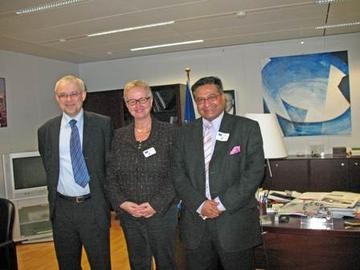
The aim of the negotiations is to reach a European-wide agreement on measures to tackle the issue of injuries from sharps (such as needlesticks) in hospitals. HOSPEEM Secretary General Godfrey Perera and EPSU General Secretary Carola Fischbach-Pyttel (pictured with Commissioner Spidla) had previously sent a joint letter to the Commissioner announcing their intention to start formal social dialogue negotiations on the issue of sharp injuries in hospitals. The Social Dialogue talks are due to start on 26 January 2009.

HOSPEEM-EPSU ‘Sharp Injuries’ negotiations letter to Commissoner Spidla