PRESS RELEASE
Brussels, 1st June 2022
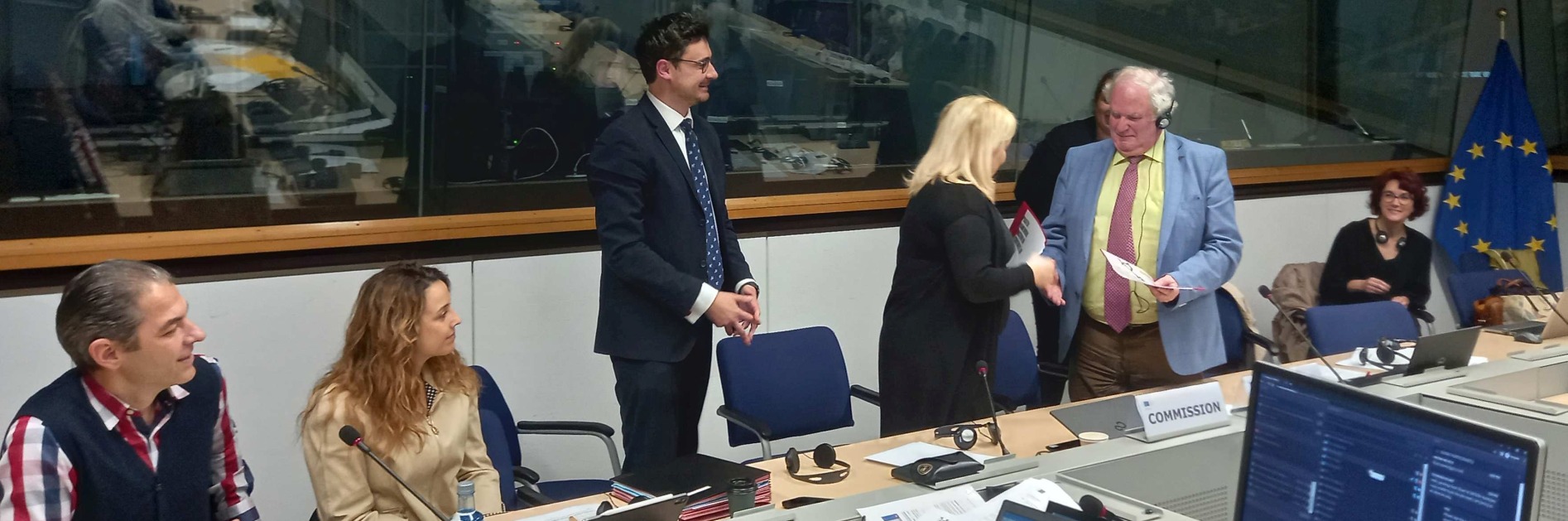
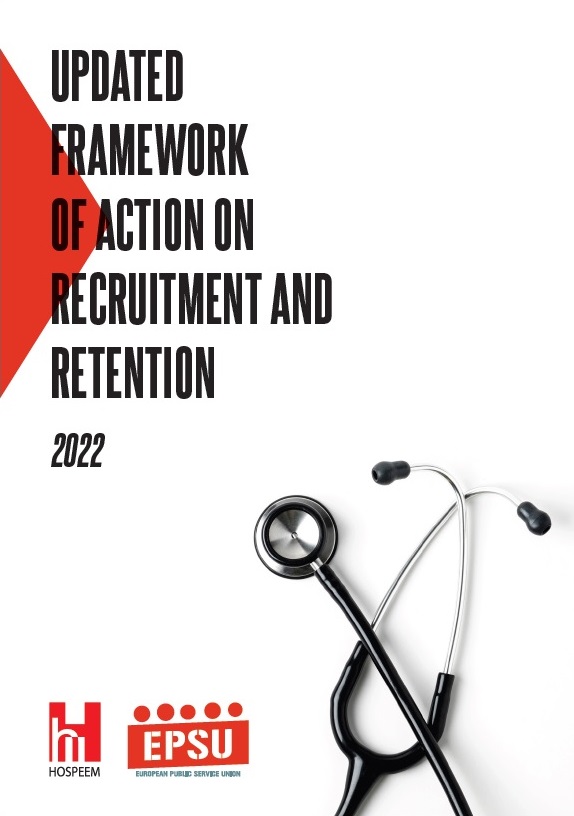
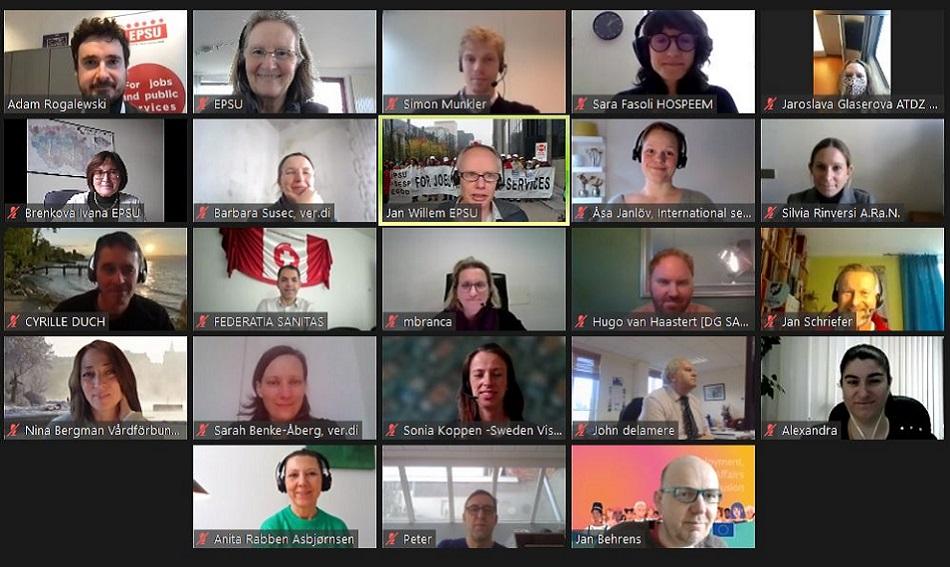
Yesterday, the EU sectoral social partners in the hospital and healthcare sector, the European Public Services Union (EPSU) and the European Hospital and Healthcare Employers’ Association (HOSPEEM), signed the updated Framework of Actions on Recruitment and Retention (FoA R&R).
The original text was over a decade old; the revised text now better reflects the changes Europe’s health services have undergone in recent years.
Marta Branca, Secretary General of HOSPEEM, says: “Health staff shortages continue to be an issue for the hospital and healthcare sector across Europe. With the updated Framework of Actions on Recruitment and Retention, we social partners re-commit to initiatives that can strengthen the resilience of the health workforce.”
Jan Willem Goudriaan, General Secretary of EPSU, says: “The COVID-19 pandemic shows the importance of adequate workforce levels and protection from Psychosocial Risks at work. In the updated Framework of Actions, we underline that! For, us workforce planning mechanisms must take present and future needs into account to ensure that an adequate number of staff with the requisite skills are available in the right place at the right time.”
The updated FoA includes aspects related to COVID-19, work-life balance, gender equality and digitalisation, focusing on the increasing Occupational Health and Safety issues which are important for health workers. These include psycho-social risks and stress, carcinogens, mutagens and reprotoxic substances (Hazardous Medicinal Products), musculoskeletal diseases and thirdparty violence.
Social partners are calling to urgently strengthen public health services in order to adequately deliver quality care, ensure equal access and make these services more resilient towards future health emergencies.
They also call on Member States and the European Commission to support social partners in sectoral social dialogue and collective bargaining processes, in particular in Southern and Eastern Europe, within the framework of the ongoing Social Dialogue review process of the European Commission.
The updated text stresses social partners’ commitment to strengthen the attractiveness of the sector and to support a rights-based approach for recruiting migrant workers.
It also includes references to existing initiatives for retention, e.g., an active ageing policy and addressing occupational safety and health risk factors together. The signatories also emphasise that social partners must be involved in workforce planning (worker’s needs, skills needs and skills mix) on all levels. The new framework of actions promotes diversity and gender equality in the workforce to reflect the diversity of the society it cares for.
For more information contact: Leonie Martin, HOSPEEM or Pablo Sanchez, EPSU
Notes to editors:
About the Framework on Actions on Recruitment and Retention
The initial Framework of Actions was adopted on 17 December 2010. Following a first implementation report in 2016, social partners have been negotiating an updated version between 2021 and 2022. The actions include supporting the recruitment and retention of workers in the hospital sector, improving work organization, developing, and implementing workforce planning mechanism, encouraging diversity and gender equality, continuous professional development for all workers in the sector, and achieving the safest possible working environment.
HOSPEEM and EPSU participate in the European Social Dialogue as the recognised European Social Partners in the Hospital and Healthcare Sector since 2006. A range of joint documents (declarations, code of conduct, framework of actions, framework agreements) have been adopted and multiple projects and activities have been successfully completed ever since.
European Hospital and Healthcare Employers’ Association https://hospeem.org/
European Federation of Public Service Unions www.epsu.org
Press Release in .pdf
*** EPSU also have published an article ***




Recent Comments